Features Completeness checks
What's missing, part by part
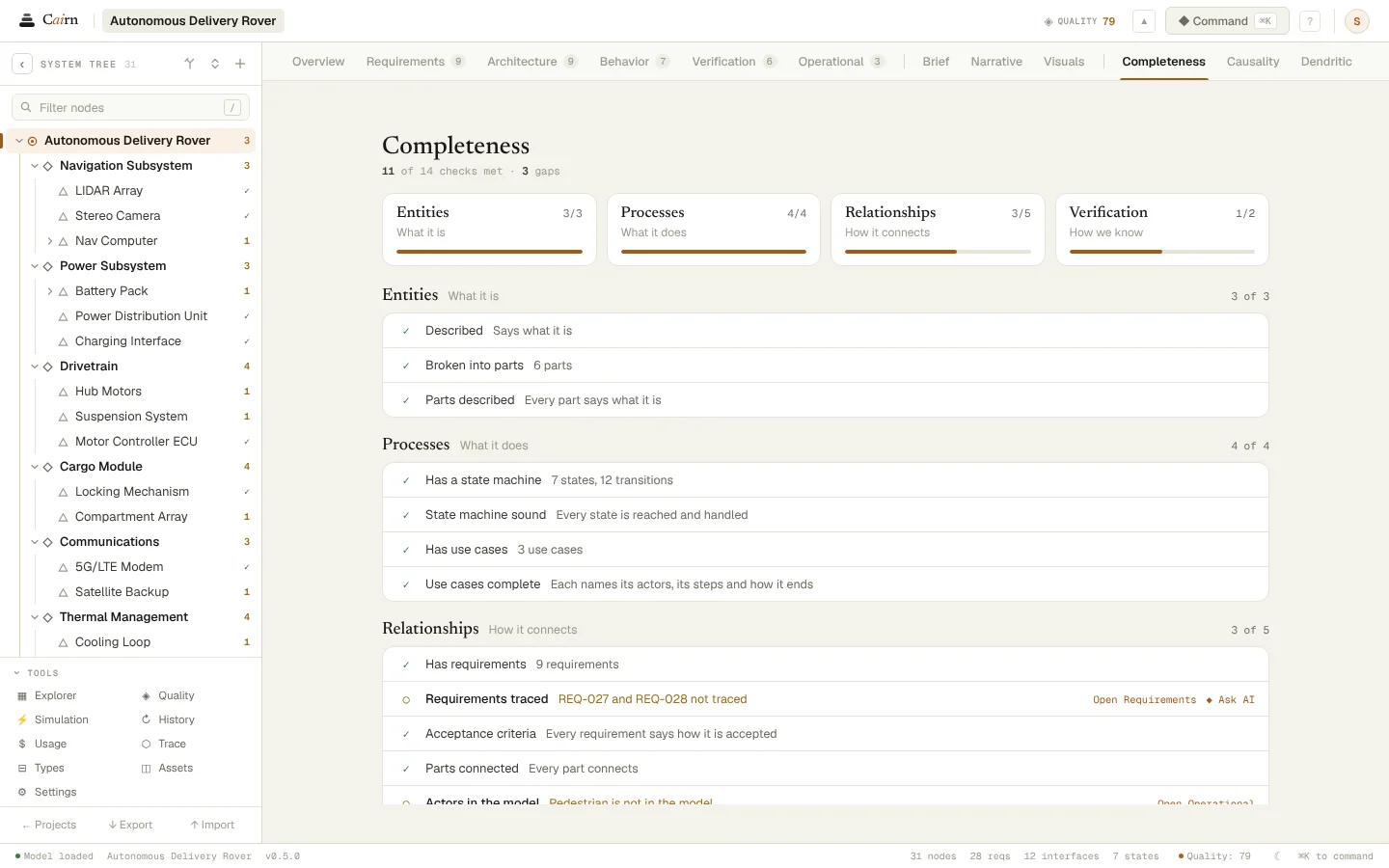
Completeness asks of each node what a reviewer would: is it described, broken down, connected, required, verified? Each answer is a check read from what another lens already knows, and each gap leads to the lens that closes it.
Four questions
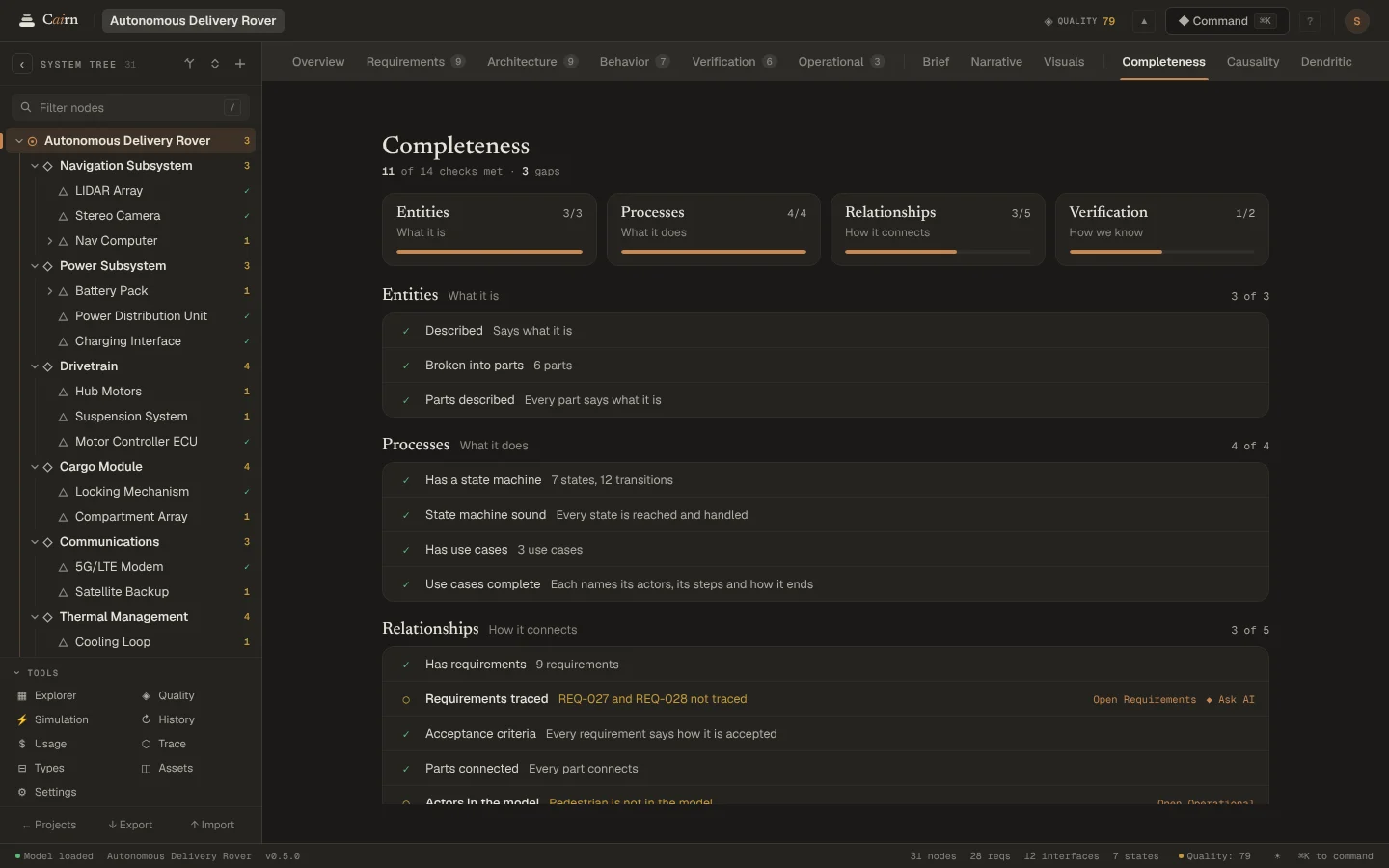
Checks are grouped along four axes, after Pace and Loper: what it is, what it does, how it connects, and how we know. Checks that don't apply to a node are left out, so a part isn't faulted for having no parts.
Gaps in the tree
While the lens is open, the system tree shows each node's gap count, so you can see where the model is thin without opening every node.
From gap to fix
Each gap leads to the lens that fixes it. Overview suggests the first gap AI can help close as a next step, and asking for it goes through Change Review like any request.
Quality, alongside
The Quality tool runs rules across the whole model, from requirements nothing satisfies to parts no interface reaches, and lists each finding with a way to it.
Questions
- How is completeness different from quality?
- Completeness asks, node by node, whether each kind of thing a node should have is there. Quality runs rules across the whole model and lists each finding. Both read the same model.
- Does a complete model mean a finished design?
- No. Completeness says the model covers what it should. Whether the design is right is still an engineer's call.
See it on your own system.
Describe what you are building and Cairn interviews you, then builds the first model with you.