Features Traceability
Every requirement, traced
A requirement is only as good as its links: to the part that satisfies it, the requirement it derives from and the activity that verifies it. Cairn keeps those links in the model, so the gaps show themselves.
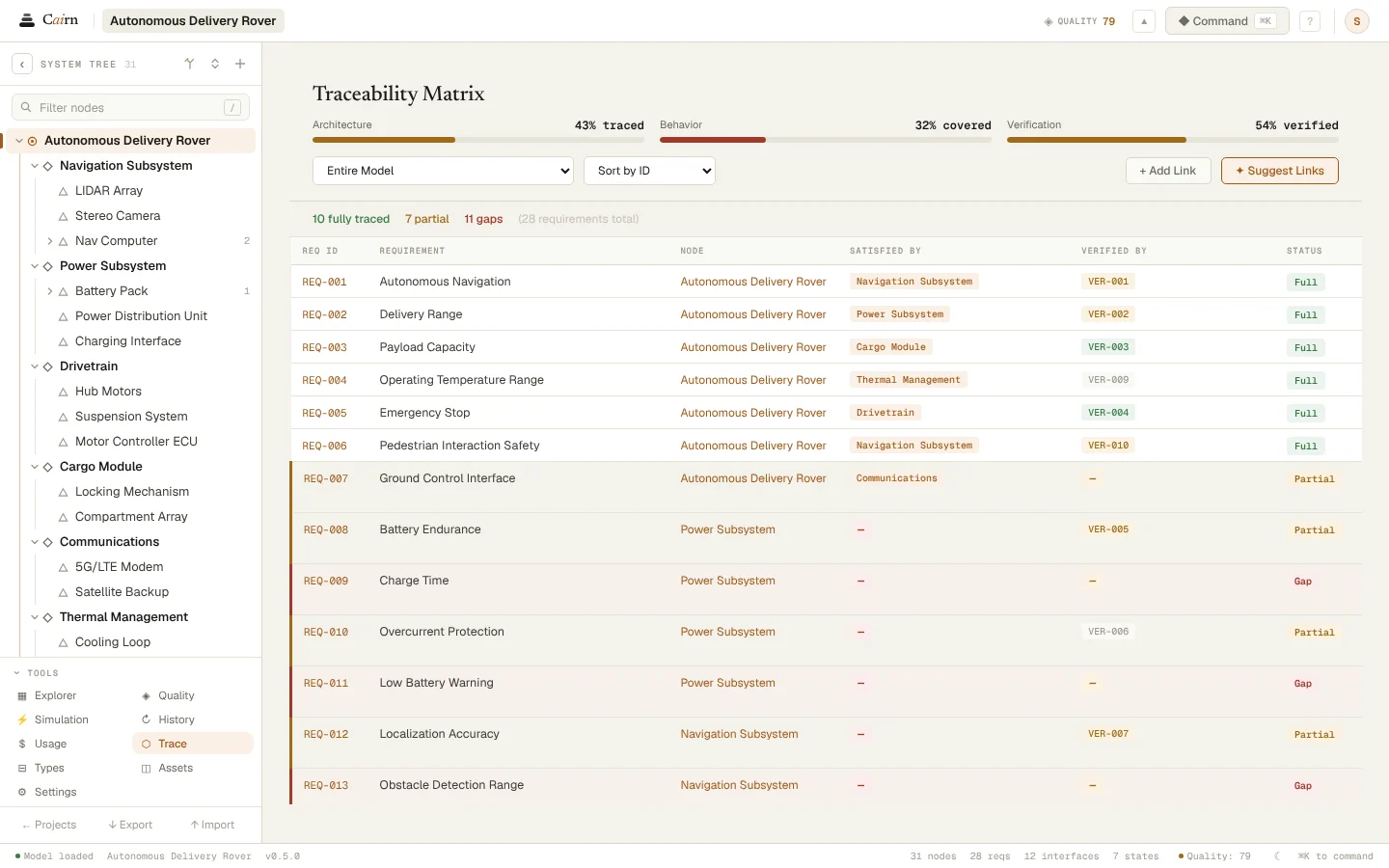
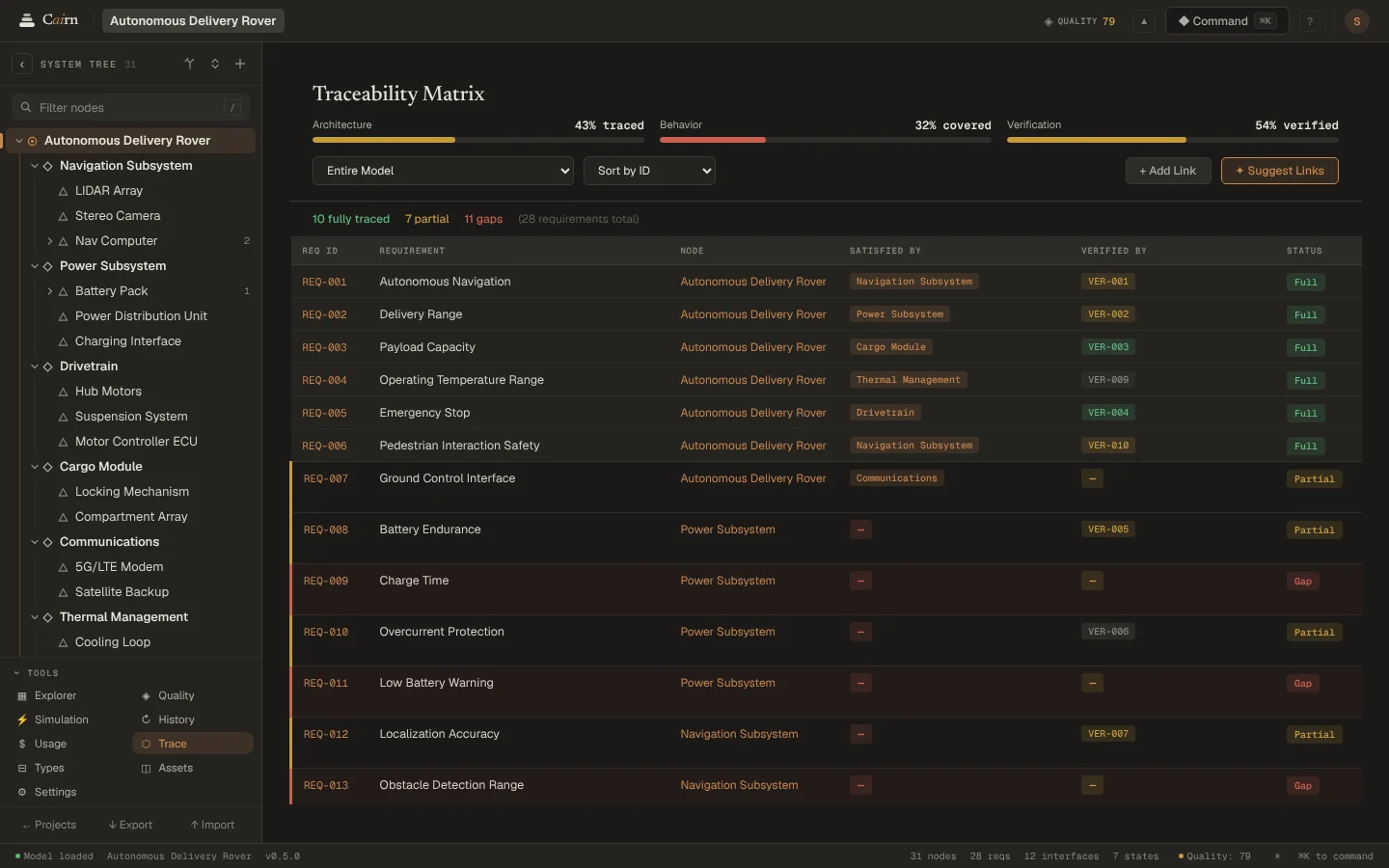
Links that say what they mean
Each trace link names its relationship: satisfies, implements, verifies, derives or depends on. A requirement counts as traced when a link that hasn't been rejected touches it.
The traceability matrix
The Trace tool lists every requirement with the node that owns it, what satisfies it, what verifies it and its status, with coverage for architecture, behavior and verification across the top. Ask AI to suggest links, and review them like any change.
Flowdown
Derived requirements nest under their parents across levels in the Requirements lens, so you can follow a system requirement down to the part that carries it.
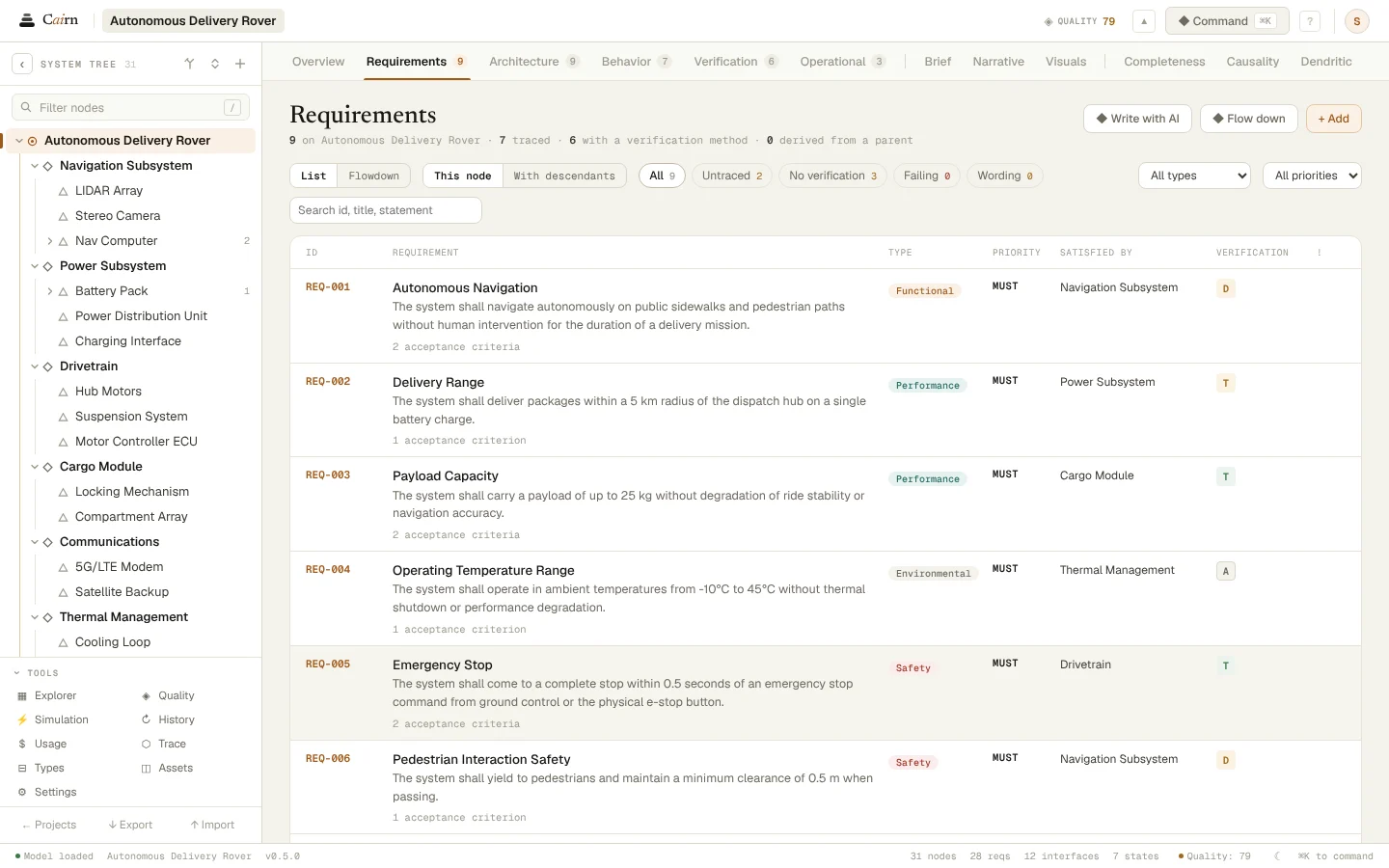
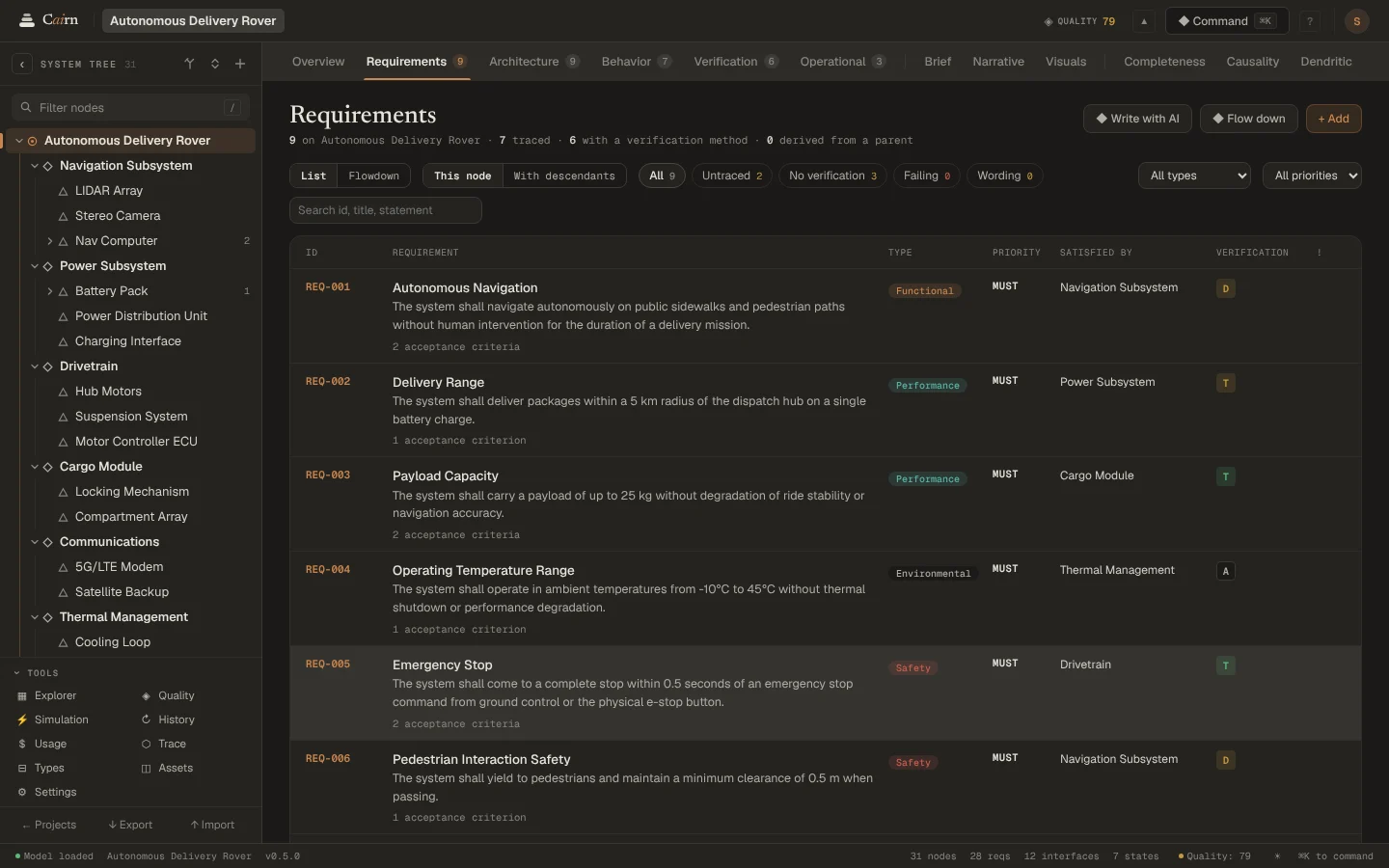
Gaps, not guesswork
Untraced, unverified and failing requirements are chips you can click in the Requirements lens, and Completeness counts them with everything else a node is missing.
Questions
- What is requirements traceability?
- Being able to follow each requirement to where it came from, what satisfies it and how it is verified, and back again. It shows what a change affects and what still lacks proof.
- Can I get my requirements into a spreadsheet?
- Yes. Settings exports the requirements as a CSV table, and the full project export holds every requirement and trace link as JSON.
See it on your own system.
Describe what you are building and Cairn interviews you, then builds the first model with you.