AI-native MBSE software for early systems engineering.
Cairn turns rough physical-system ideas into structured, traceable models.
Chat vanishes. The model stays.
An ai chat hands you a transcript. When the window closes, the structure goes with it. Cairn keeps it, as an engineering model you can inspect, edit and trace.
Describe it. Then answer a few questions.
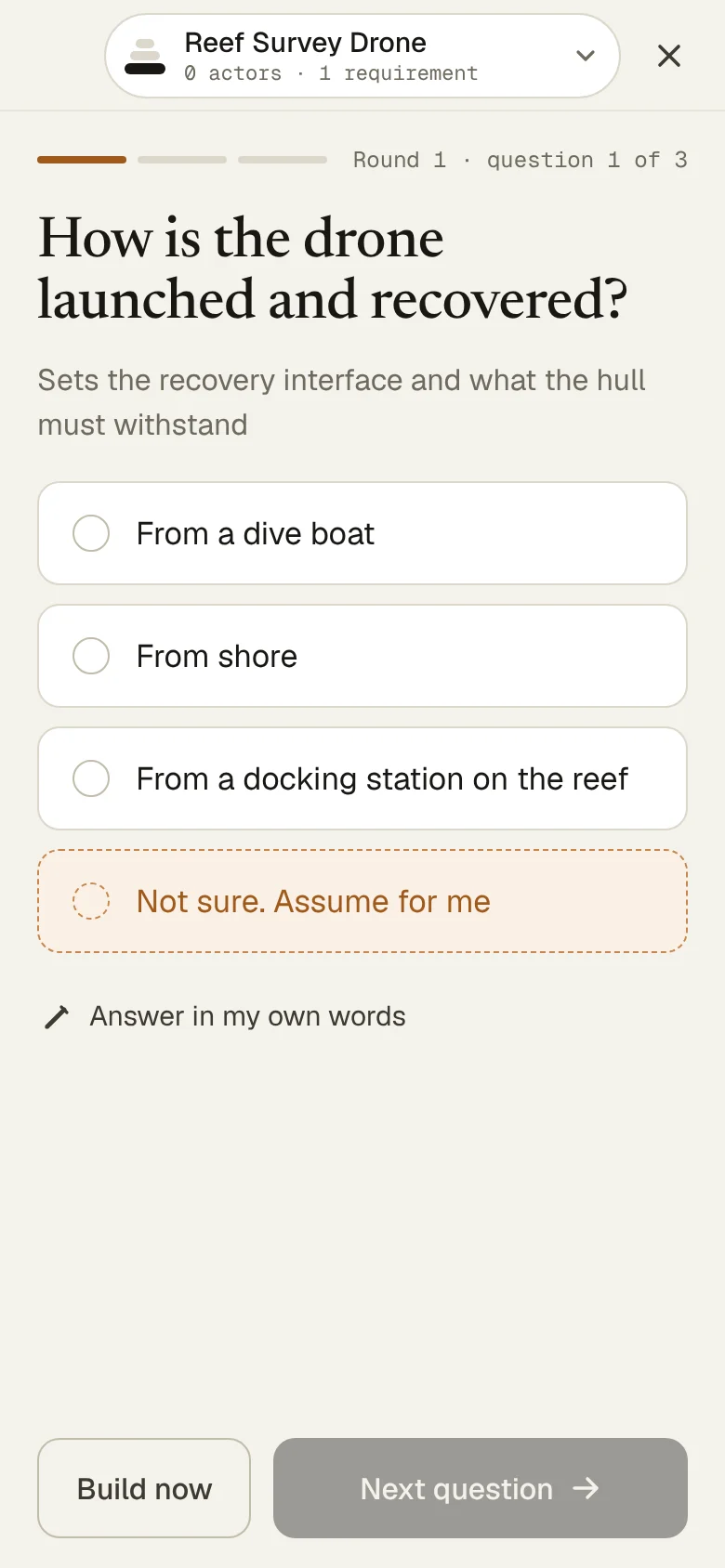
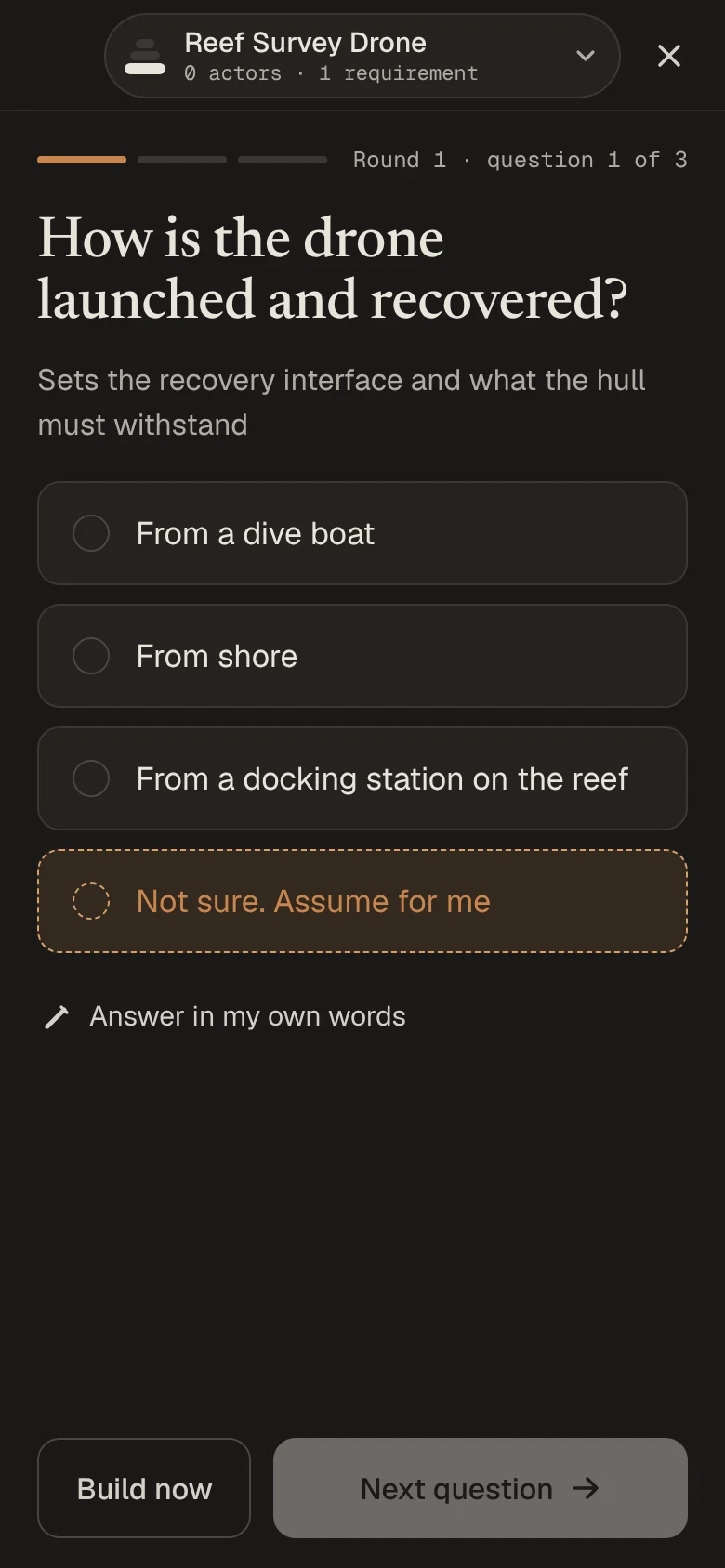
Two or three short rounds. Each answer becomes a fact marked You said or Assumed, kept or dropped by you, and each round shows what it changed. On a phone it is one question at a time.
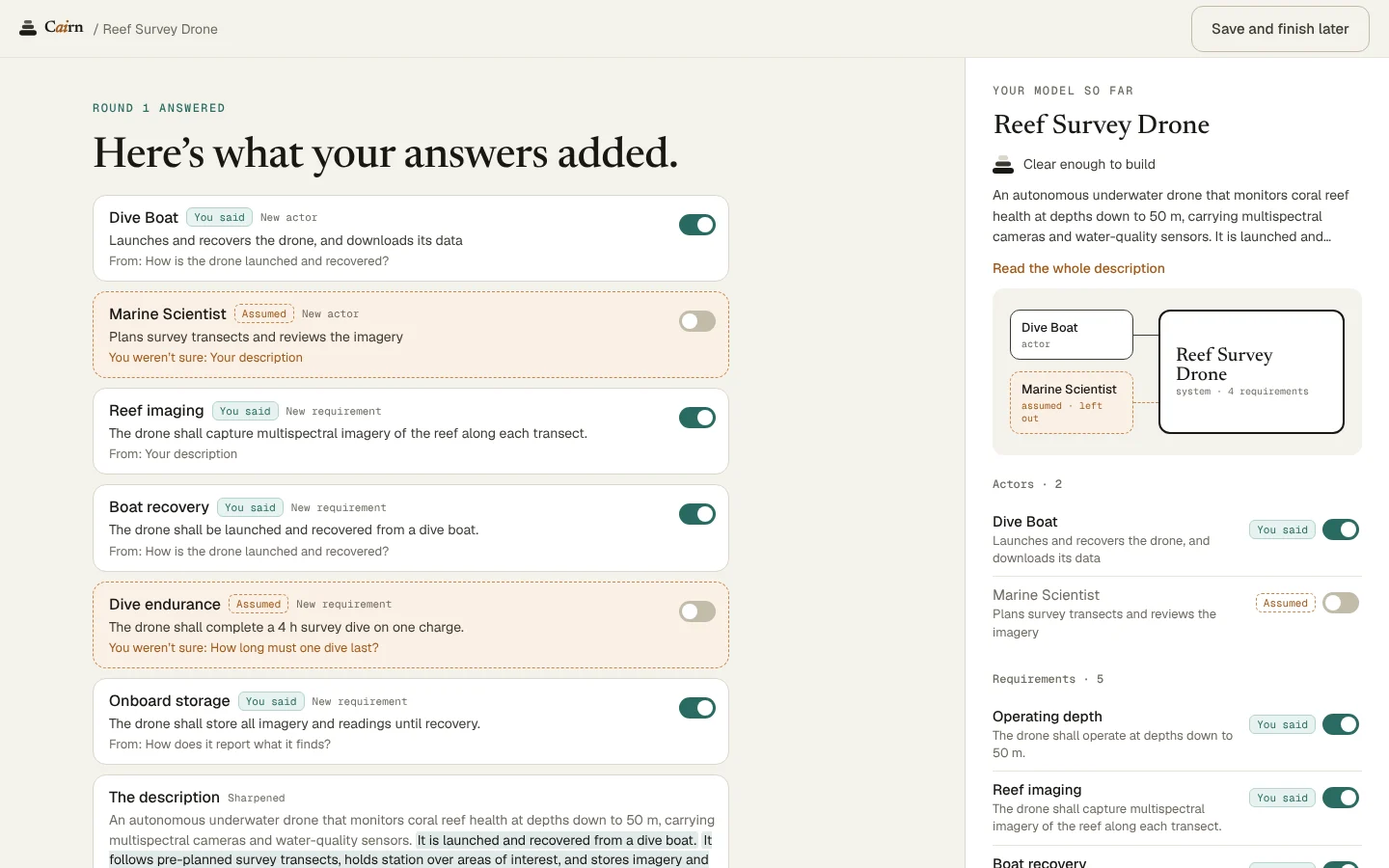
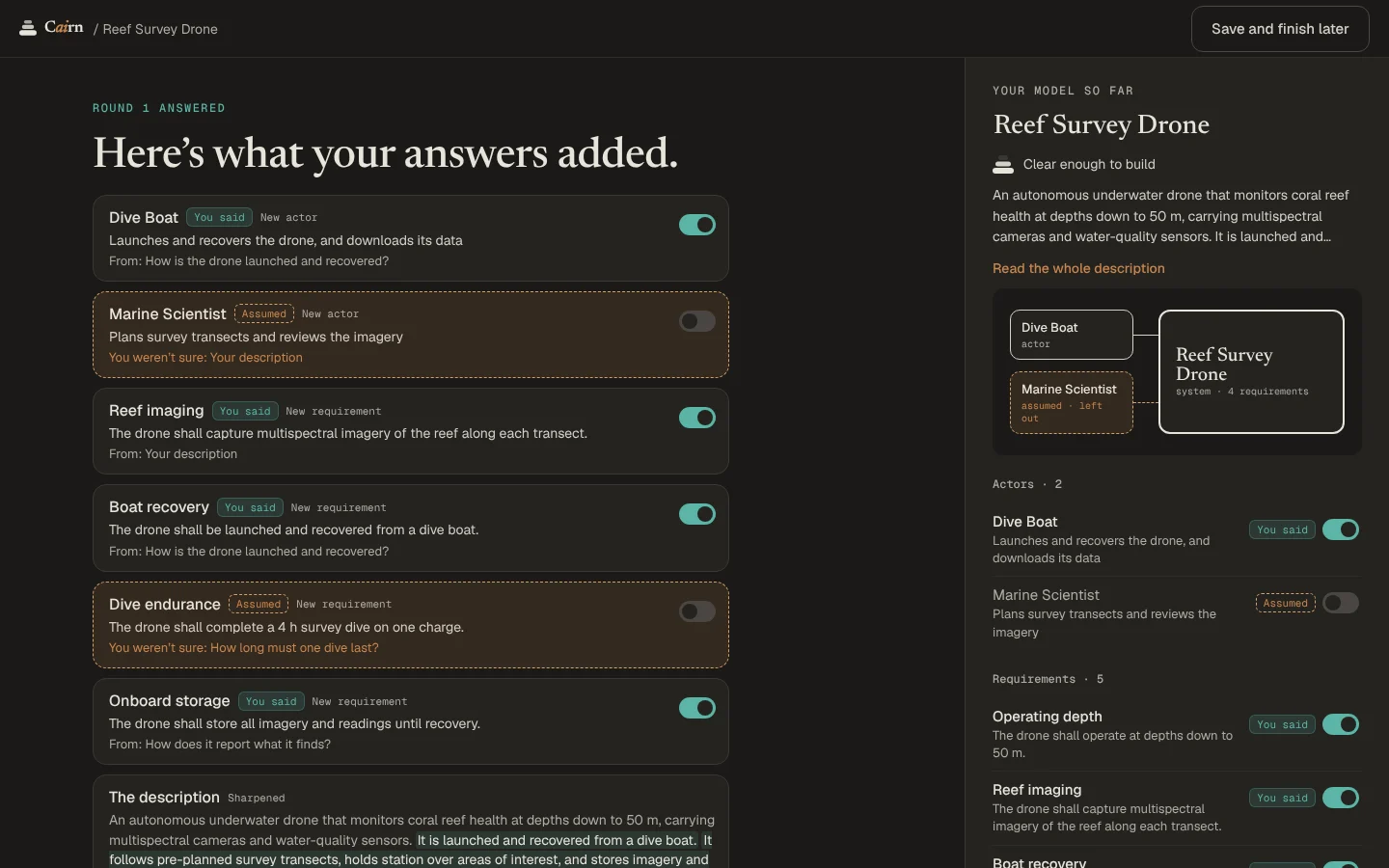
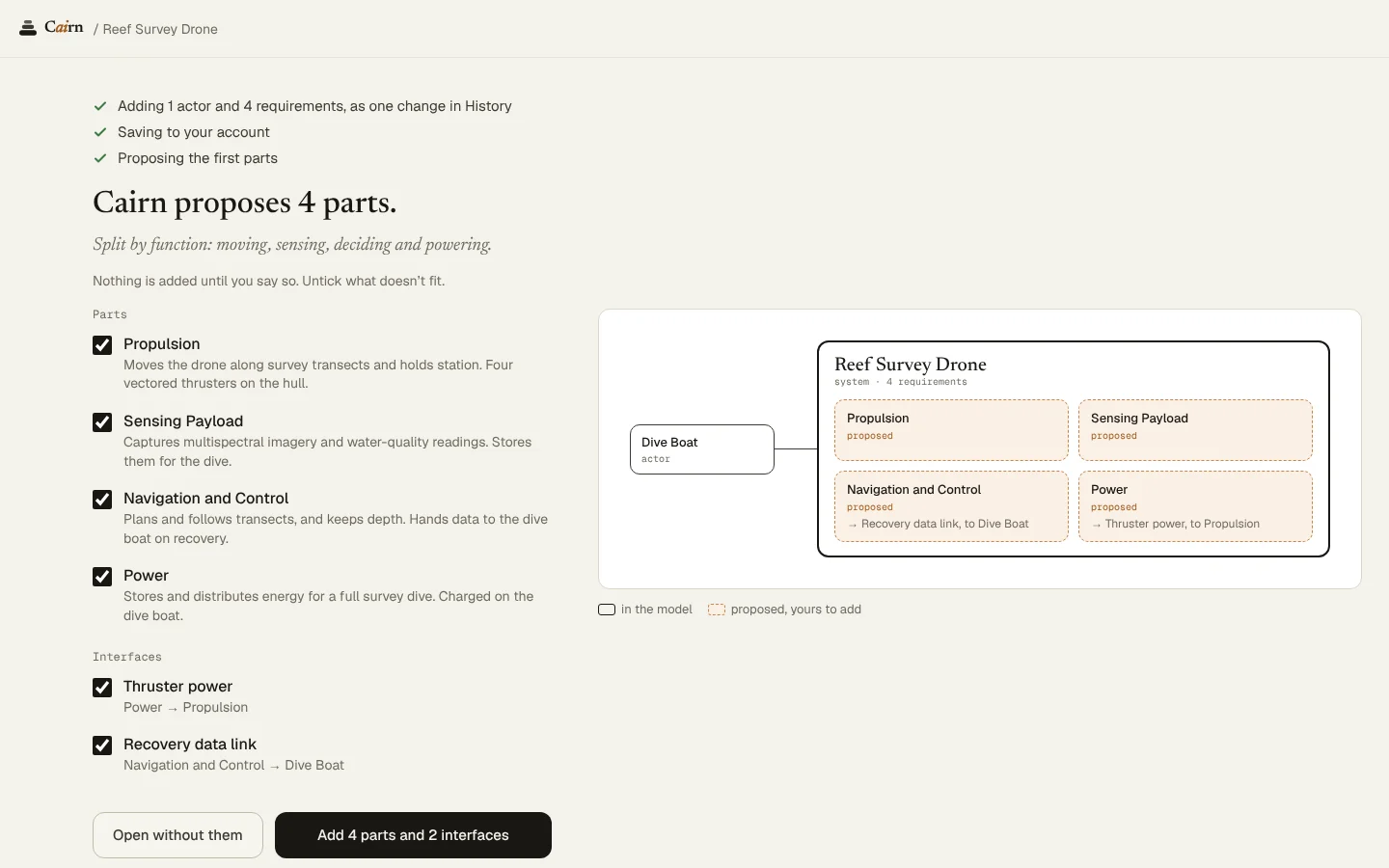
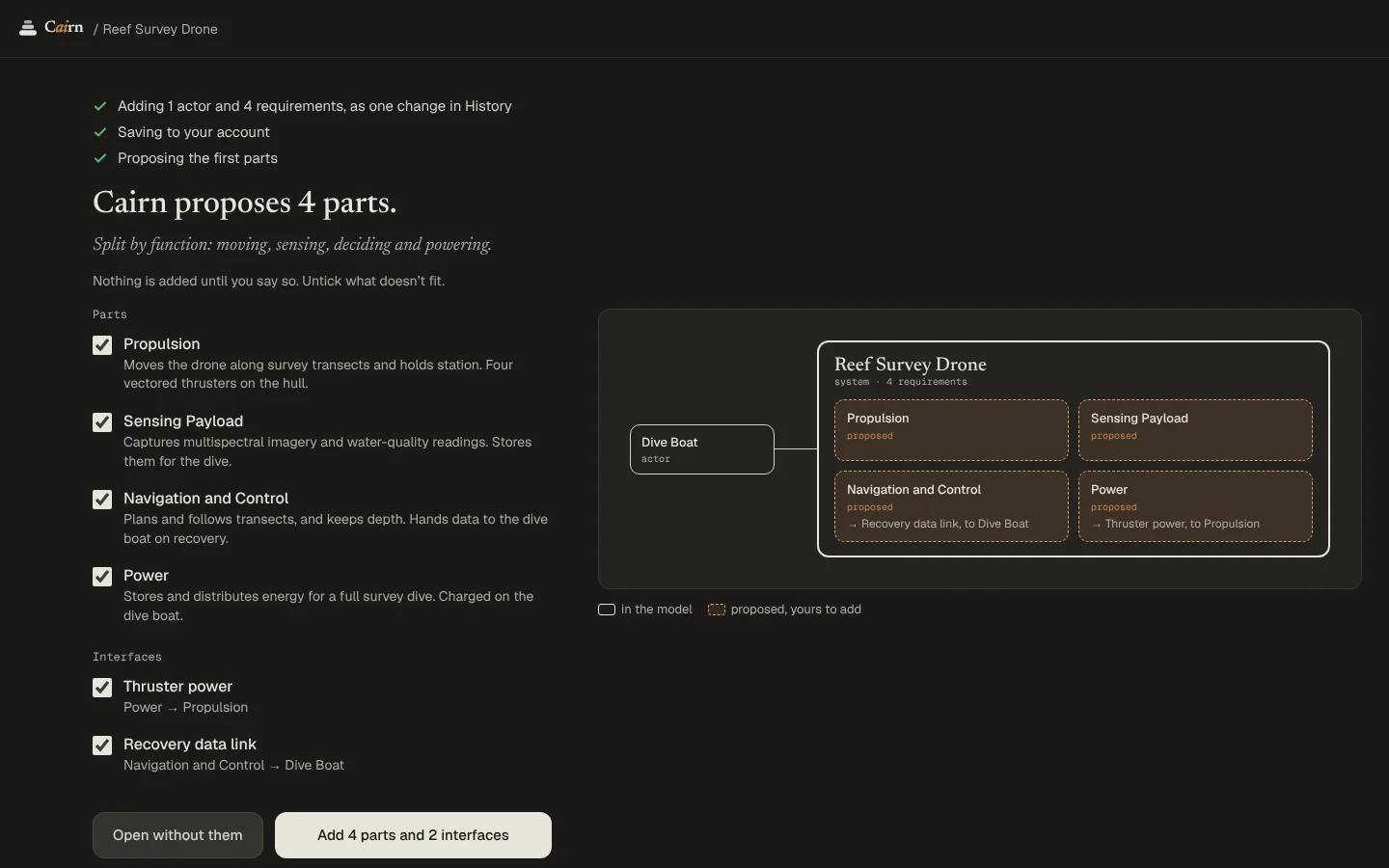
You choose the first parts.
The facts you kept go in as one change. Then the Architect proposes the first parts and their interfaces, and nothing is added until you tick it.
Twelve lenses, three groups.
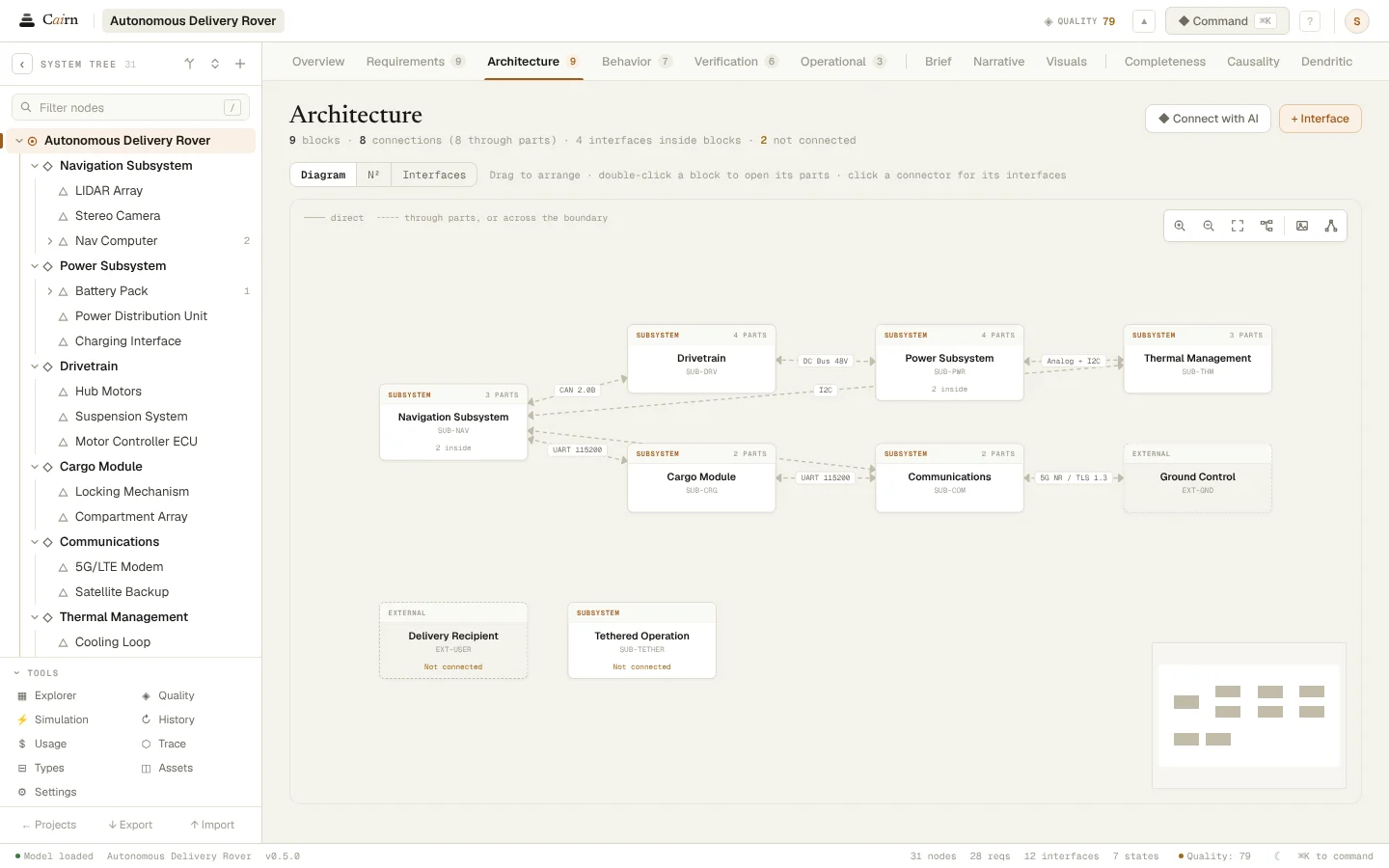
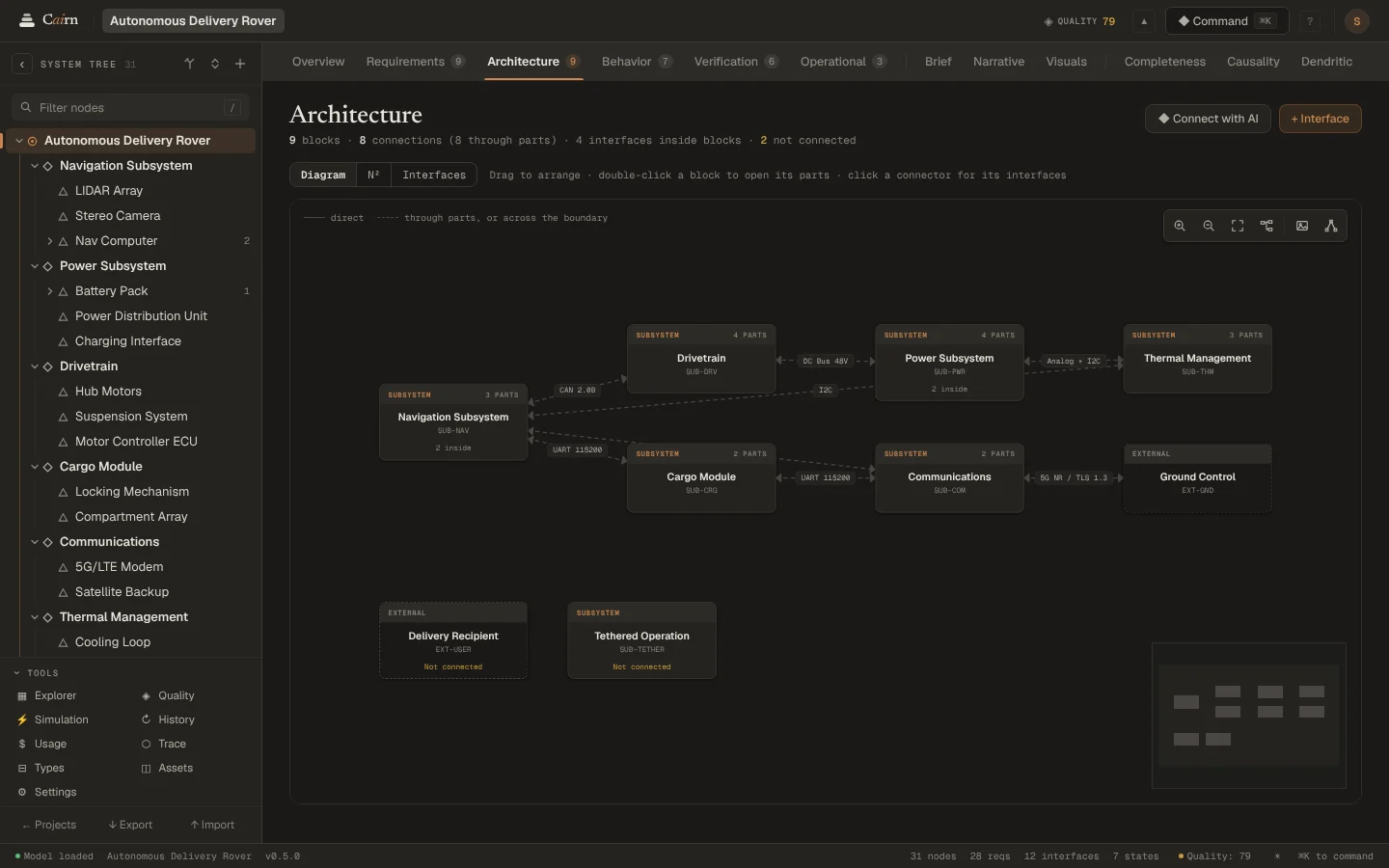
The tree picks a part of the model; a lens picks how you read it. Each has a key.
Model
- Overview OThe node at a glance: children, budgets, and every lens in summary
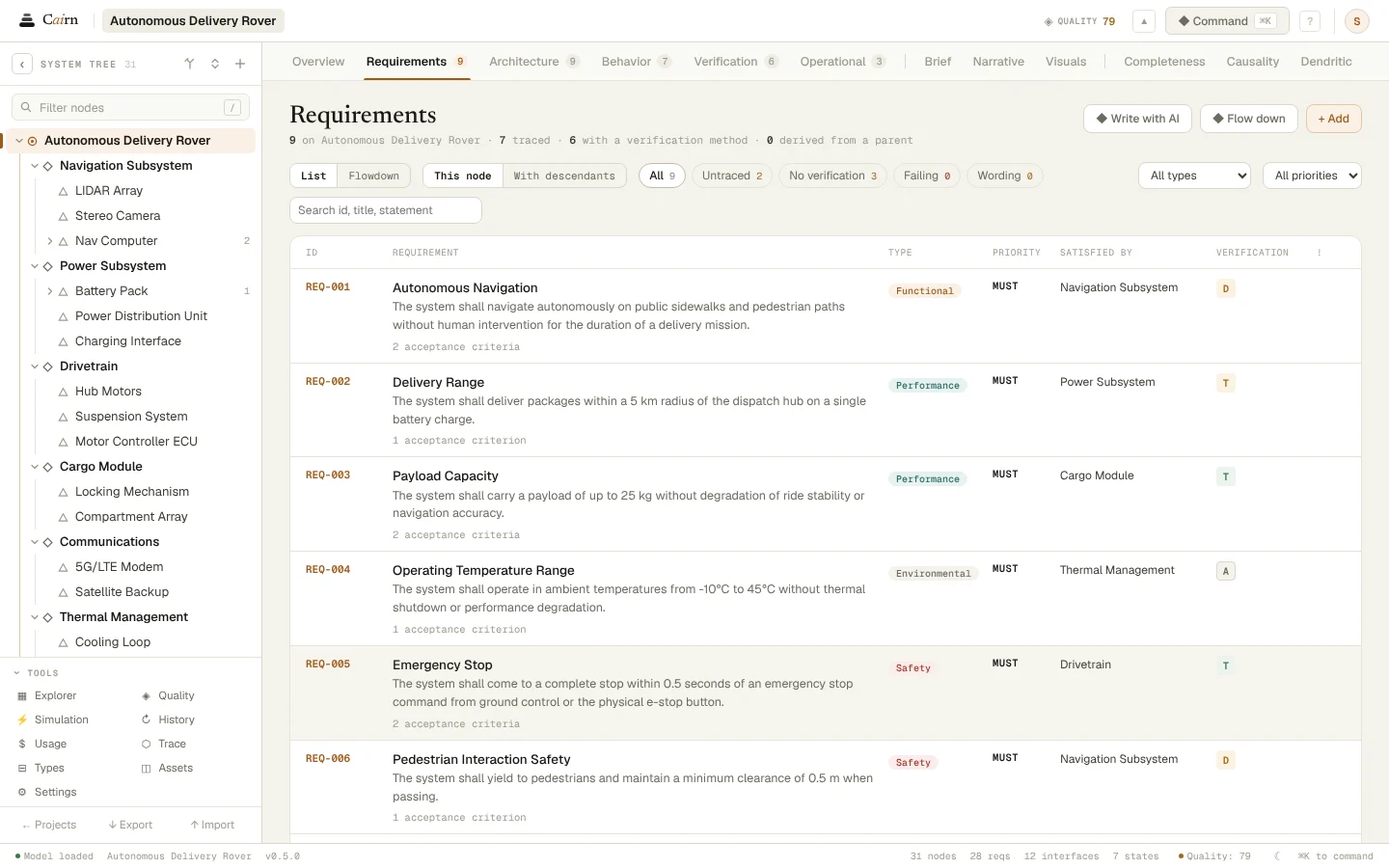
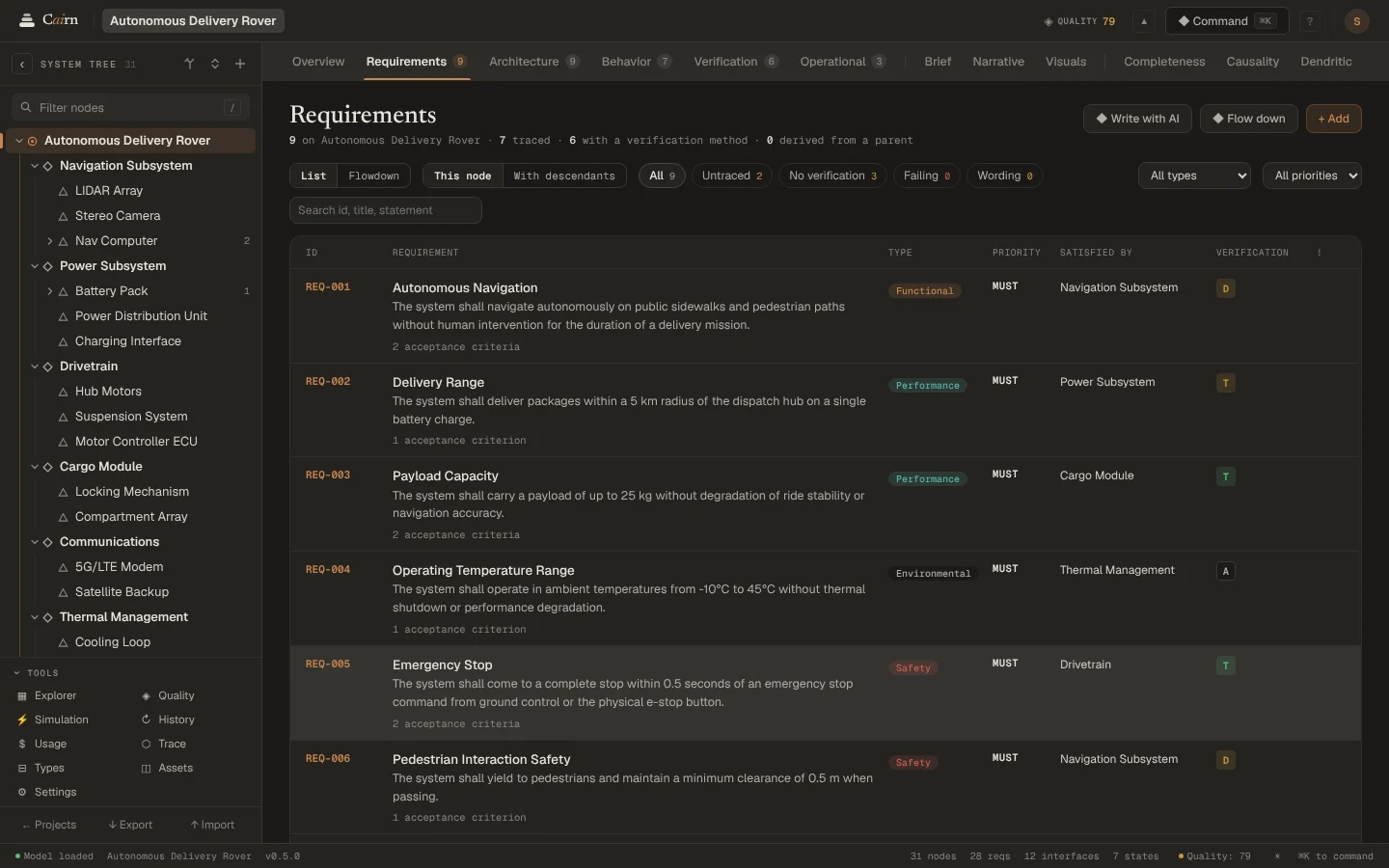
- Requirements RWhat the node must do, and what satisfies it
- Architecture AChildren as blocks and every interface between them, at any depth
- Behavior HIts states and transitions, the events each state handles, and a simulator
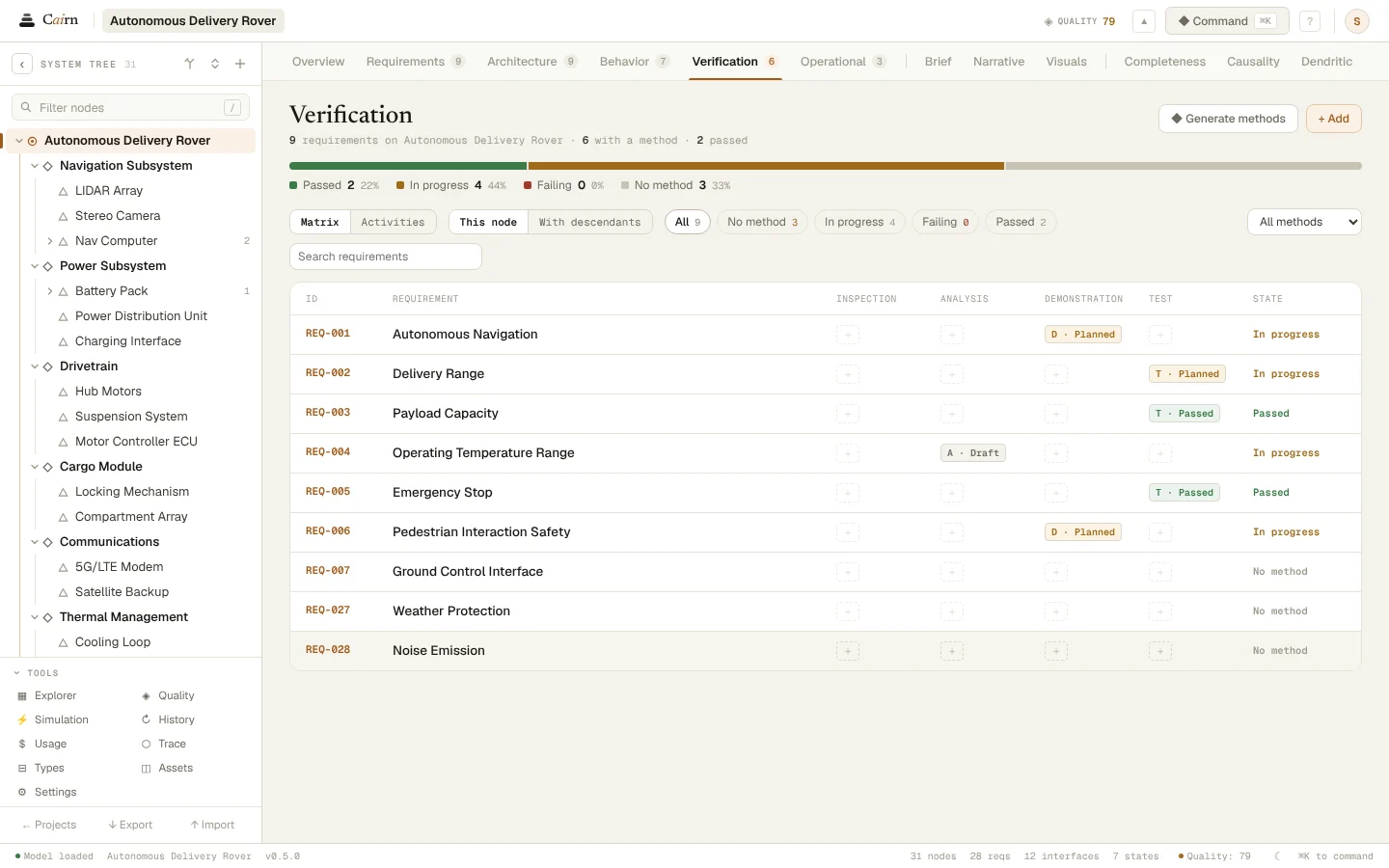
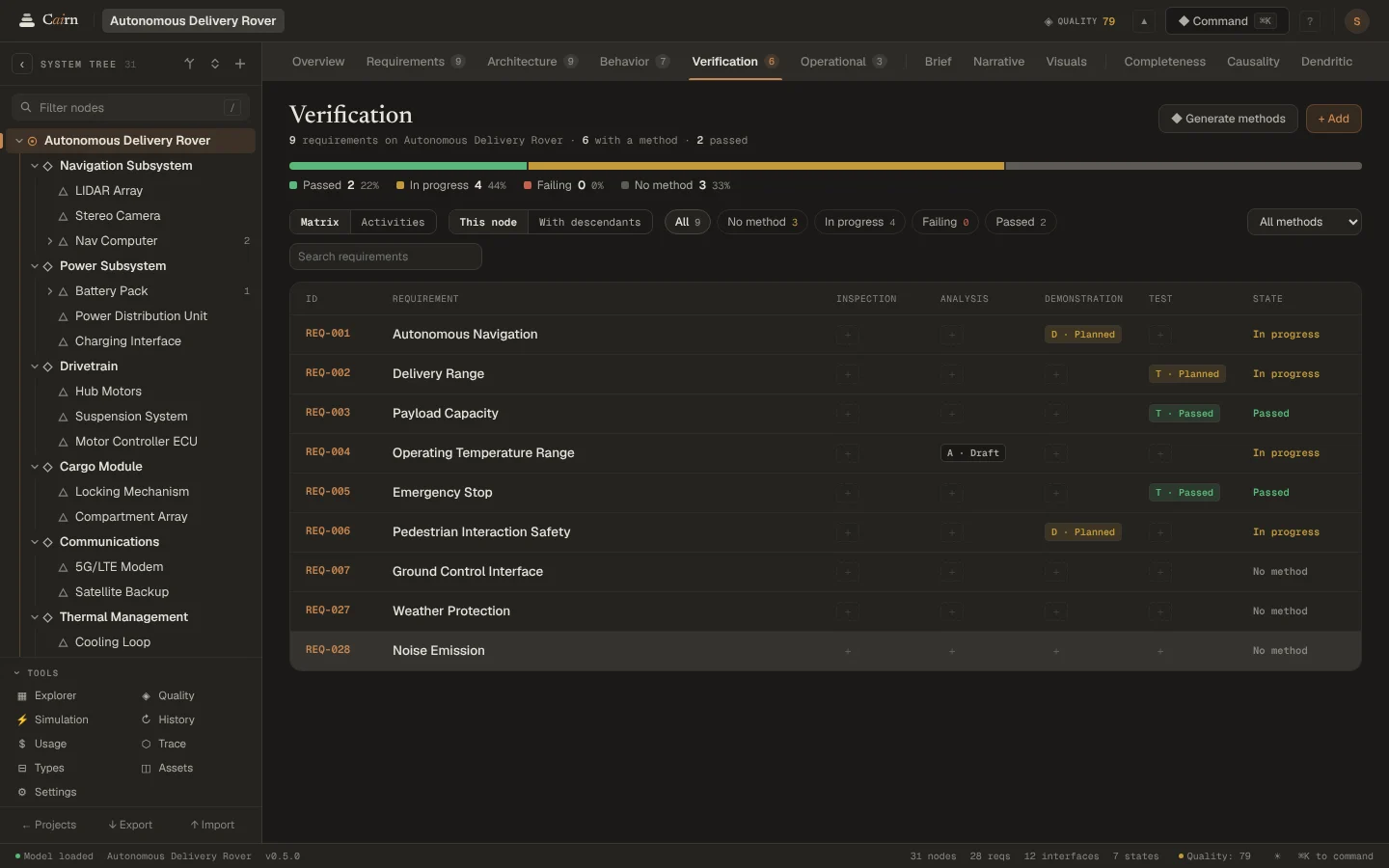
- Verification VHow each requirement is verified, and where it stands
- Operational PUse cases: actors, conditions and steps
Story
- Brief BThe node as an eight-section design brief
- Narrative NHow its parts work together, told as a systemigram
- Visuals GConcept images and a 3D mesh
Analysis
- Completeness MWhere the node is under-modeled
- Causality CThe prerequisite pyramid and its maturity
- Dendritic DDesign alternatives explored and pruned
Real engineering work. Not just text.
Concept images and a 3D mesh in the Visuals lens, each drawn from the model and marked out of date when the model moves on. A Python notebook runs analyses on a snapshot of the model, on your own key.

Nothing changes behind your back.
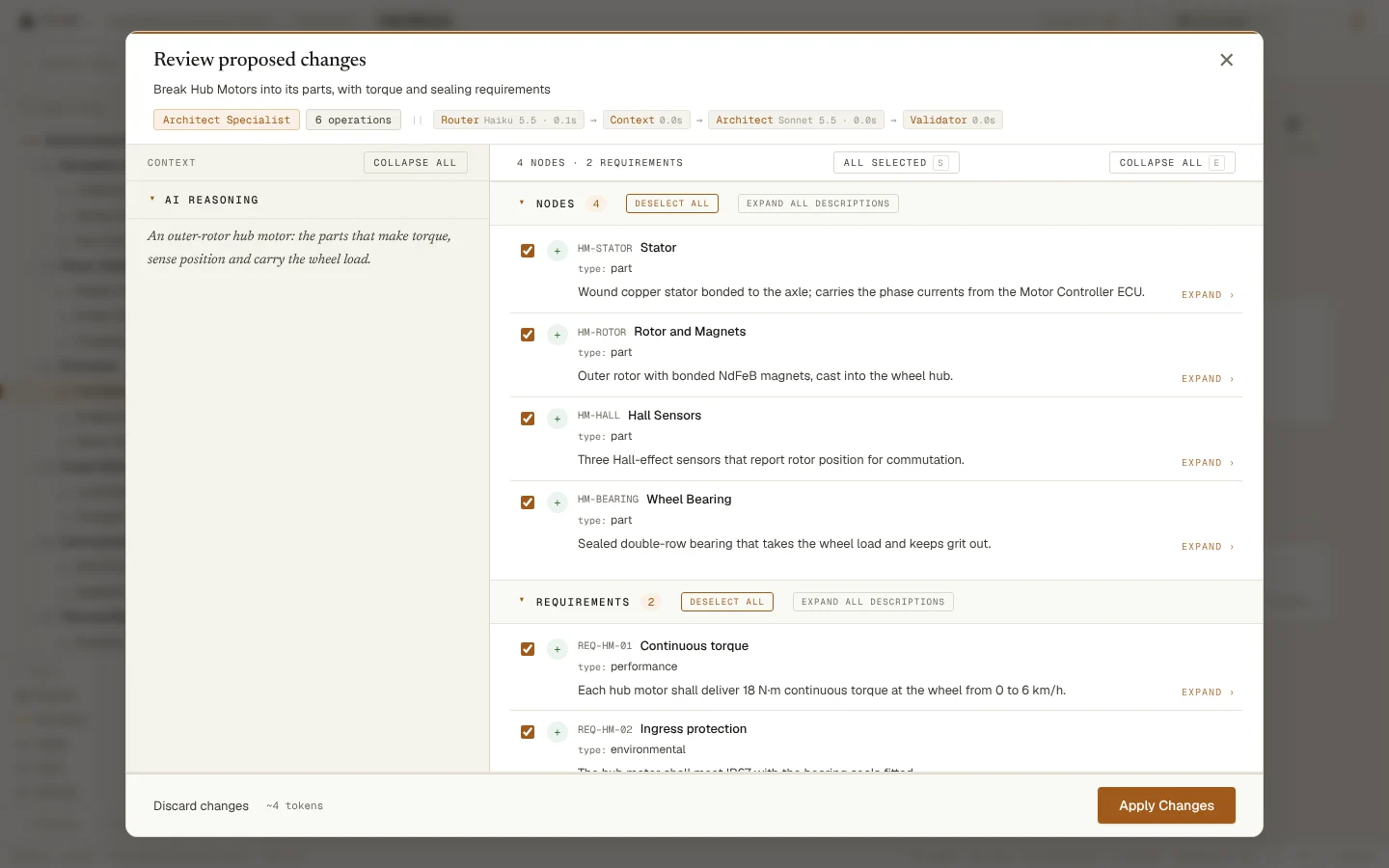
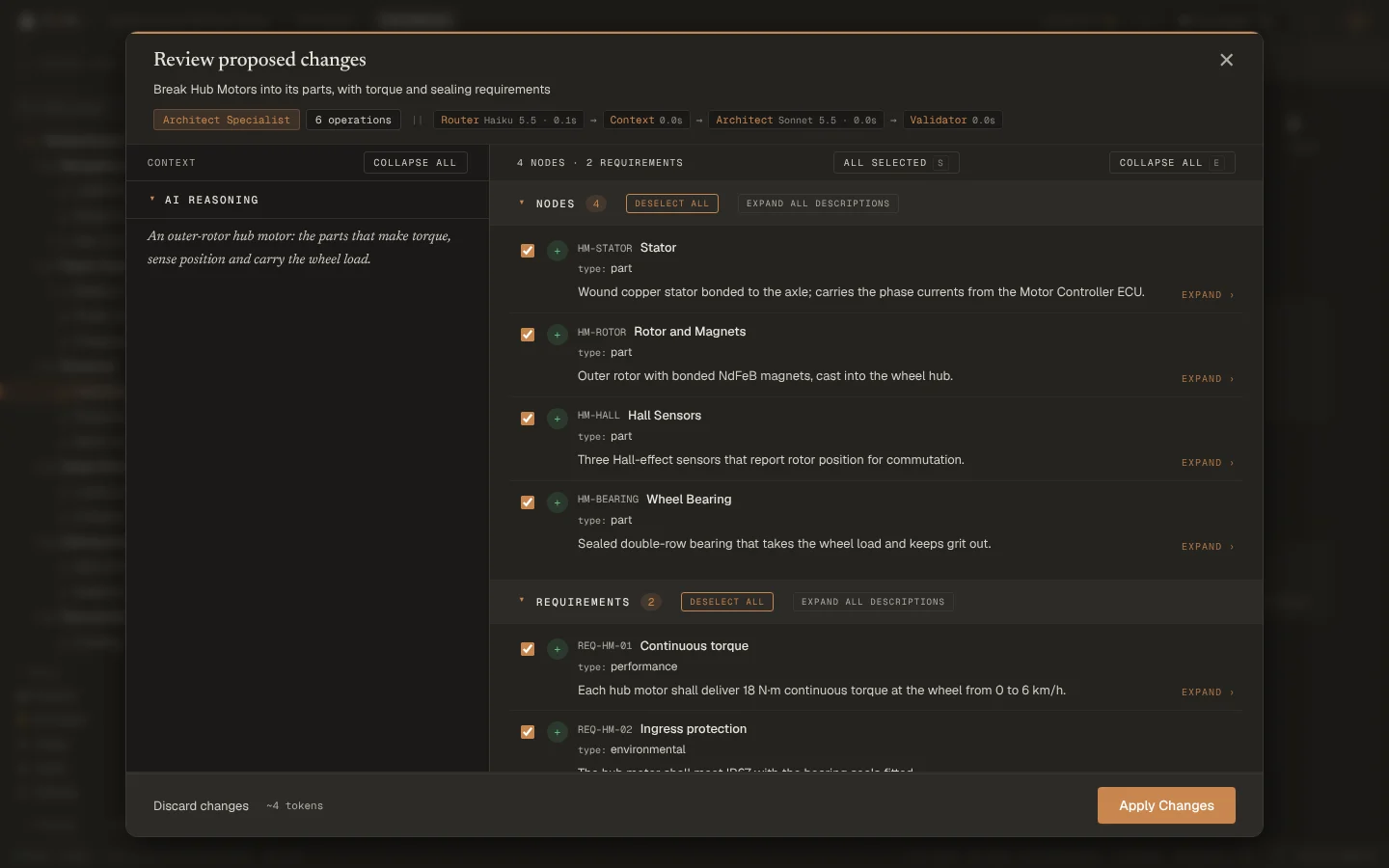
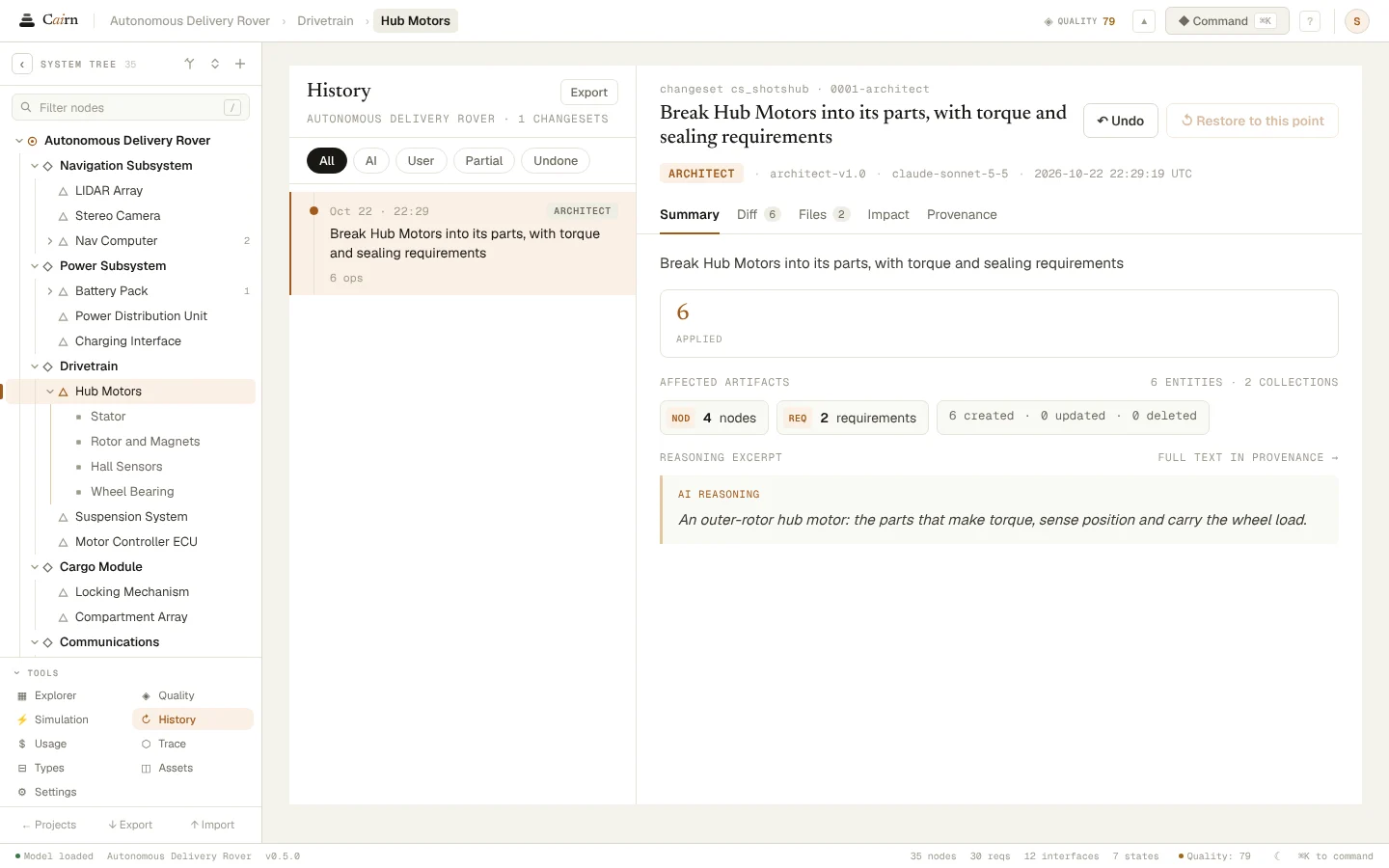
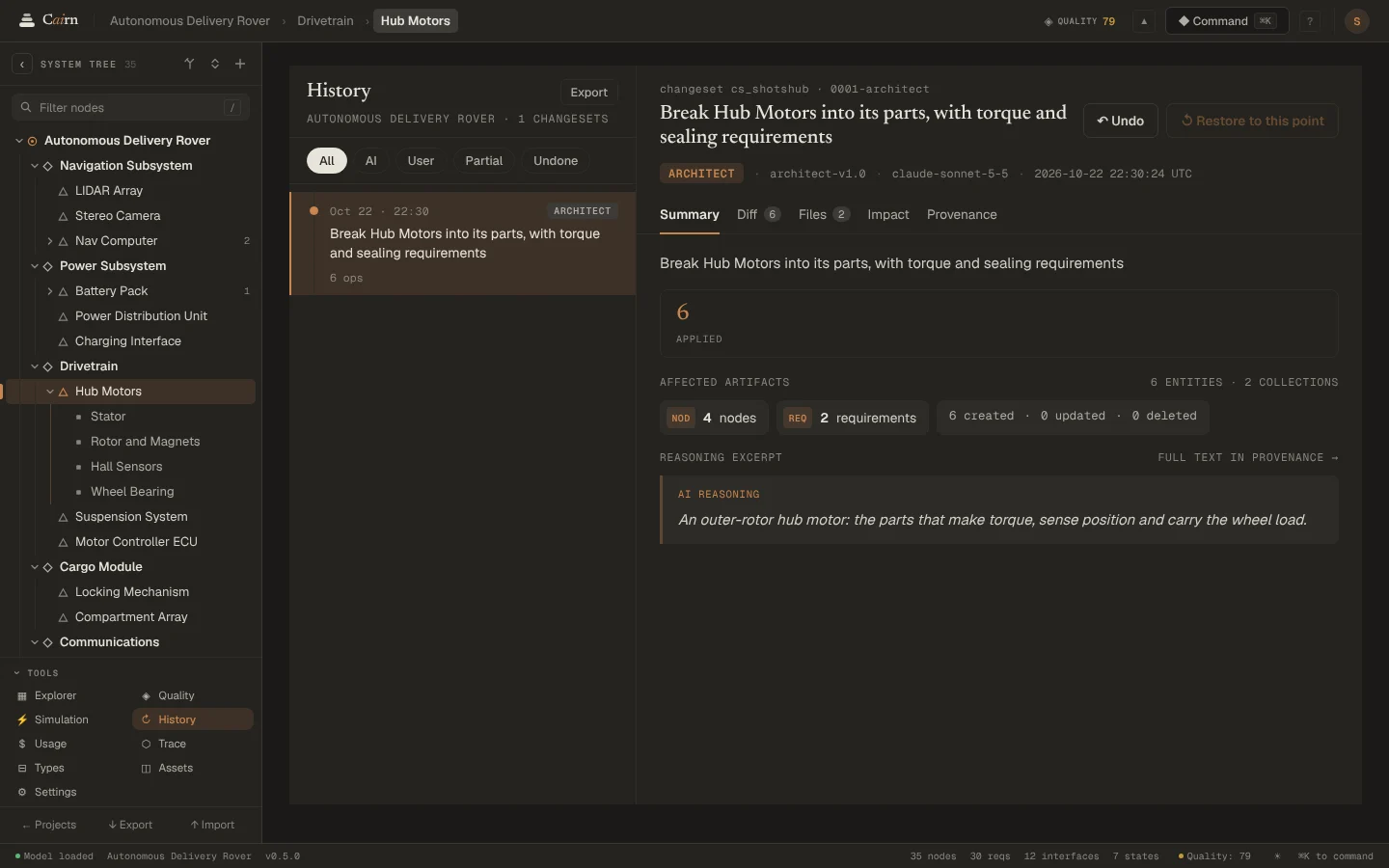
Every AI proposal opens in Change Review: the operations, the reasoning and the checks. Tick what you want and apply it as one change. History keeps each change; undo it, or restore the model to any point.
Every requirement, traced.
Requirements flow down from the system to its parts, and each says how it will be verified. The rover template carries 28 requirements, 15 verifications and 24 trace links.
The model is the artifact,
not the conversation.
AI should contribute structure to a persistent, inspectable engineering model — not generate disposable text that vanishes when the chat window closes. Every node, interface, and requirement in Cairn is explicit, traceable, and yours to edit.
10 · Your turn
What are you building?
Say it the way you would tell a colleague. Cairn asks a few questions, then builds the first model with you.
During early access: 50 AI actions every 30 days, or unlimited with your own Anthropic key.