Features The interview
An interview, not a blank page
Describe the system the way you would to a colleague. Cairn asks short rounds of questions, turns each answer into a fact you can keep or drop, and builds the first model from what you kept.
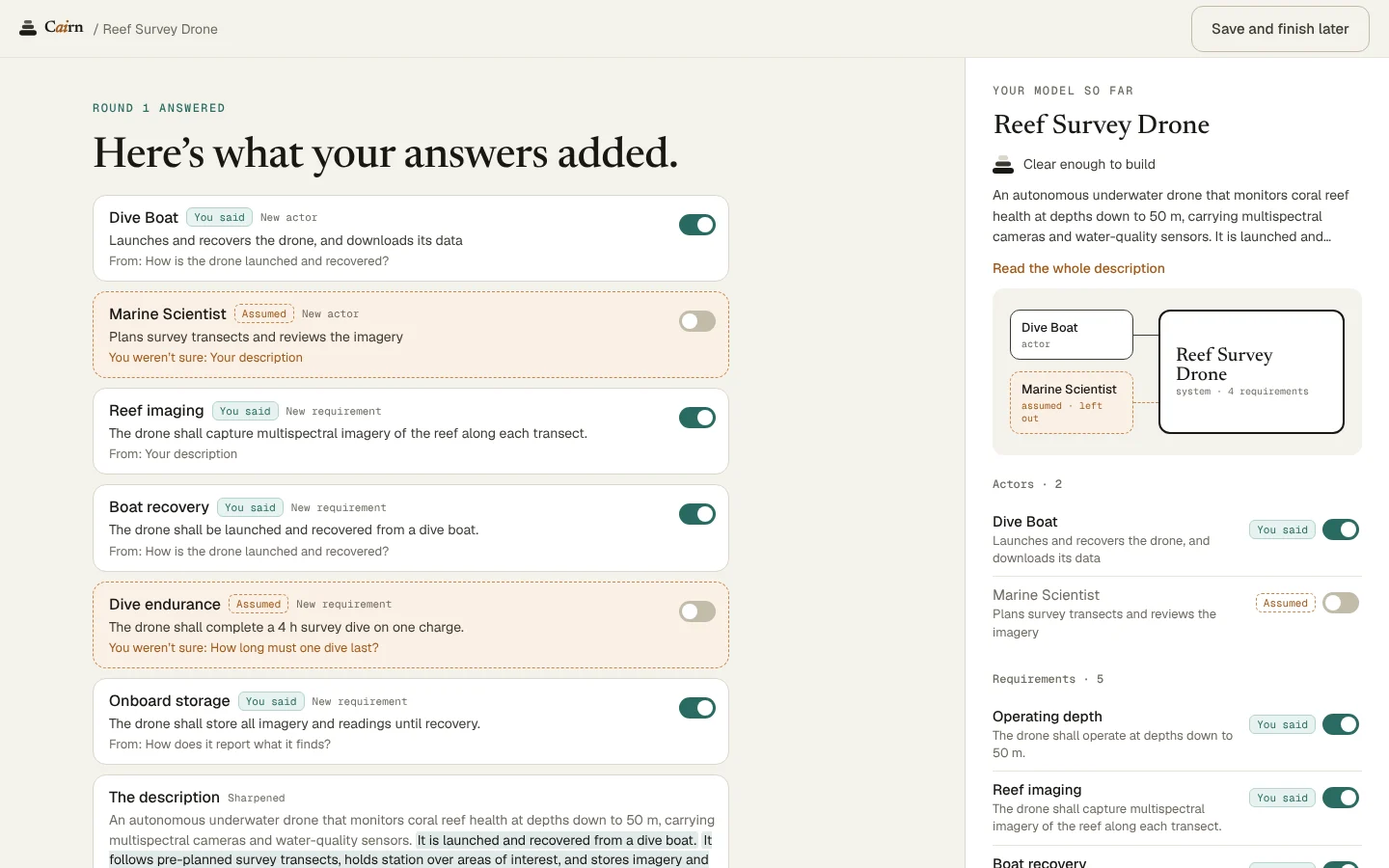
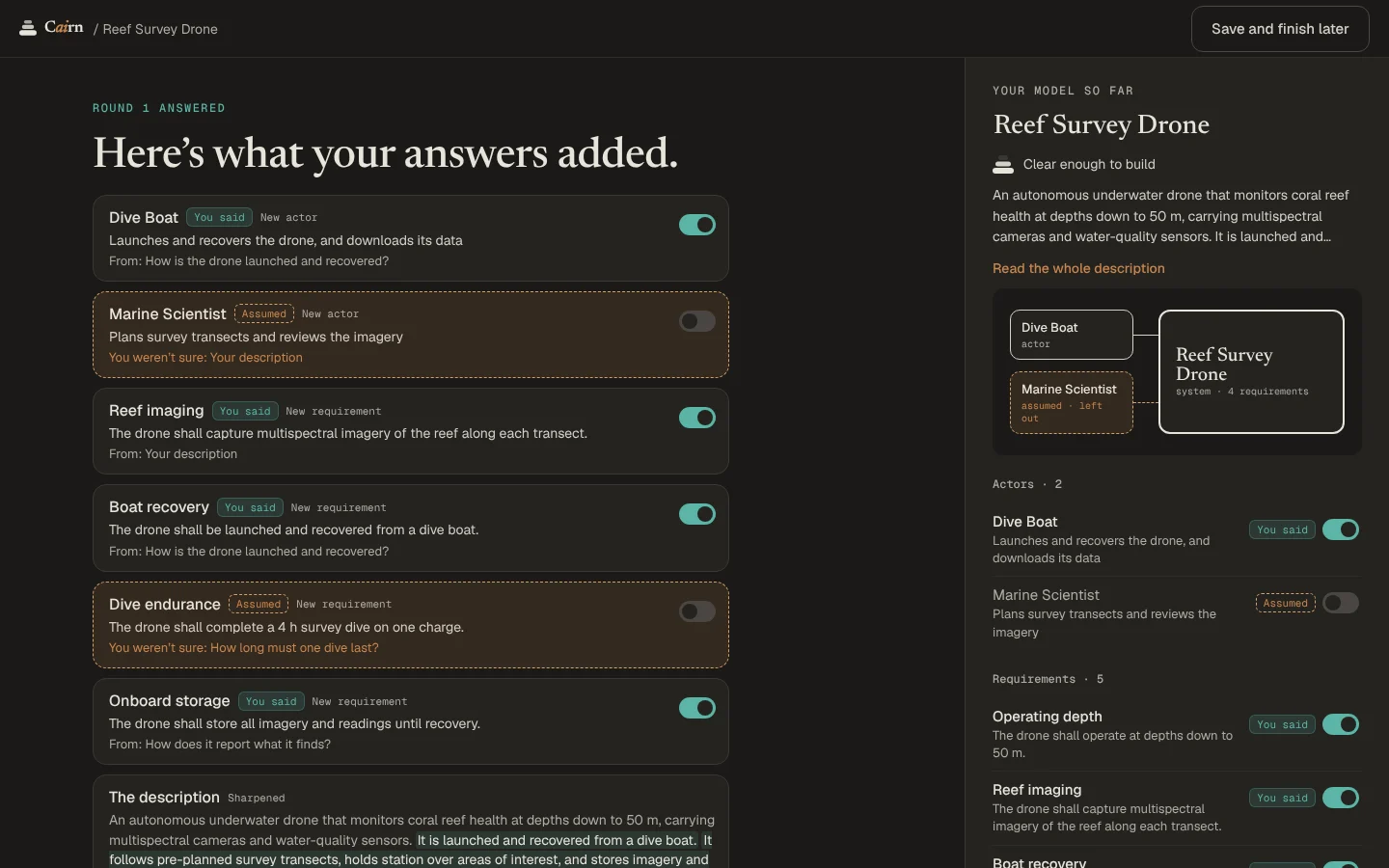
Facts you can see
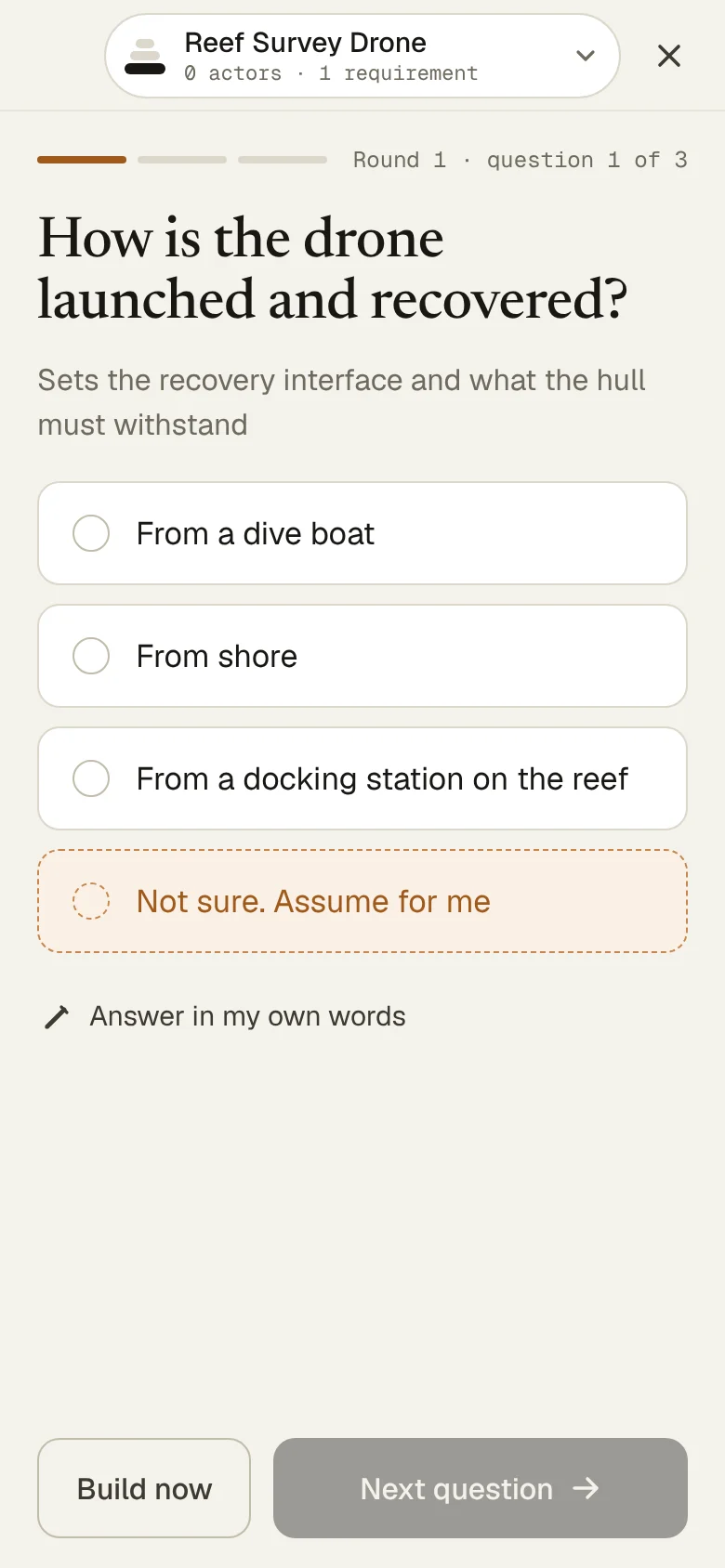
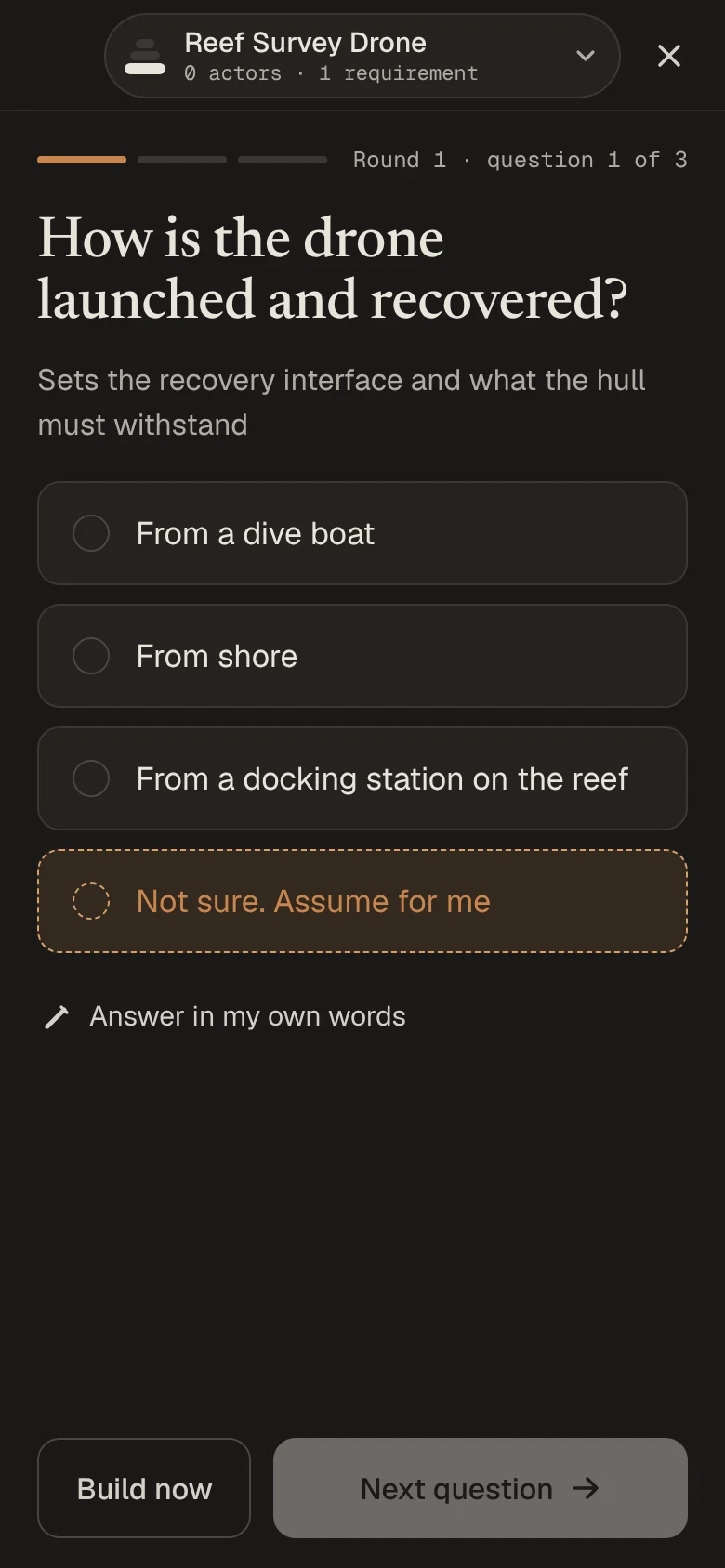
Each answer becomes a fact marked You said or Assumed. Not sure? Say so, and Cairn assumes an answer for you, marked as an assumption so you can tell it from what you said.
After each round you see what it changed: the actors and requirements it added, revised or dropped.
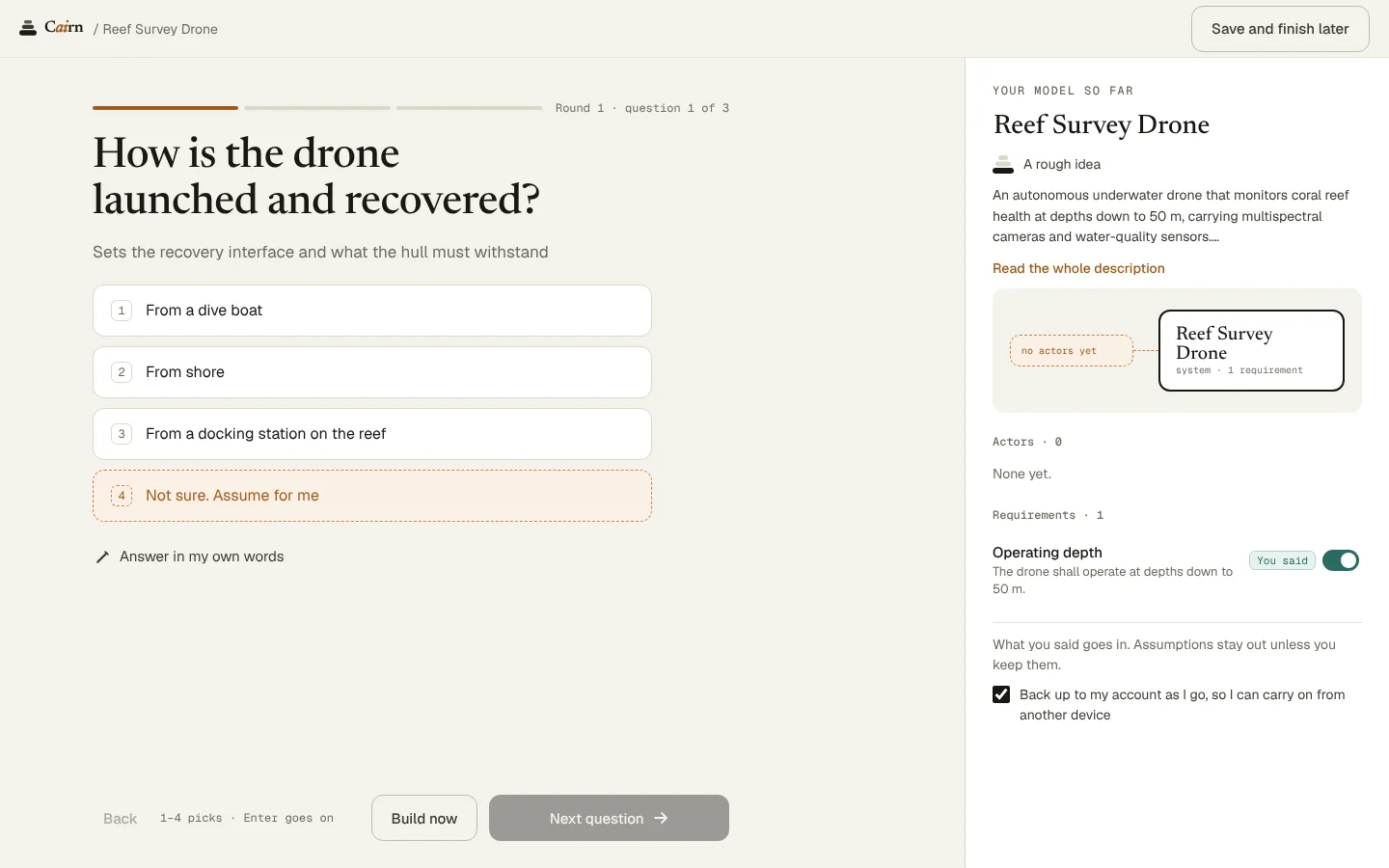
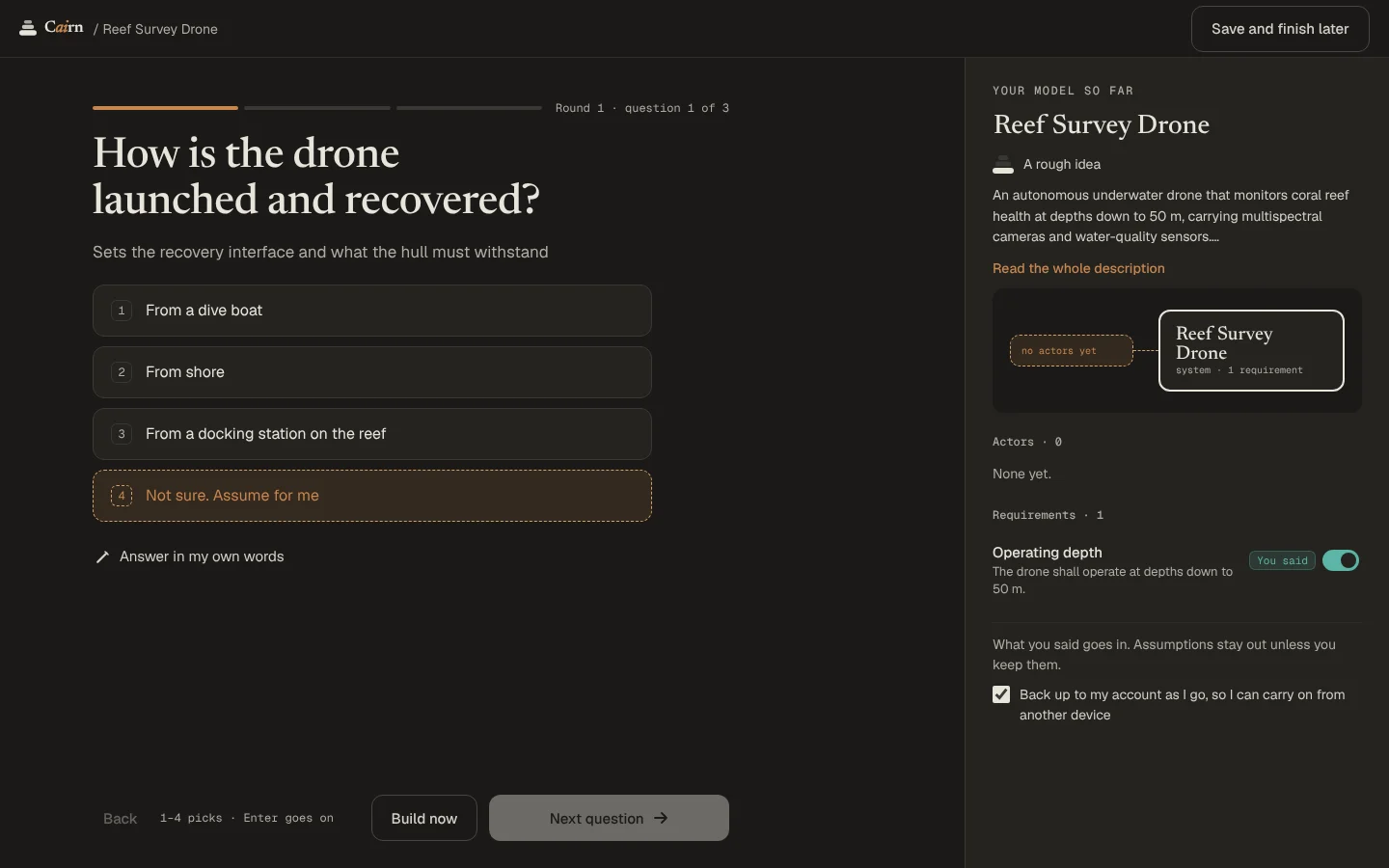
Keep what holds, drop what doesn't
Facts that have settled get a switch. Assumptions stay out of the model unless you keep them, so nothing you didn't agree to becomes a requirement.
Start on a phone, finish on a computer
On a phone the interview asks one question at a time. The draft is saved as you go, on the device at once and to your account a few seconds after each answer, so you can pick it up on any device.
The workspace needs a computer, so when you're done Cairn emails you a link to open it there.
The first build
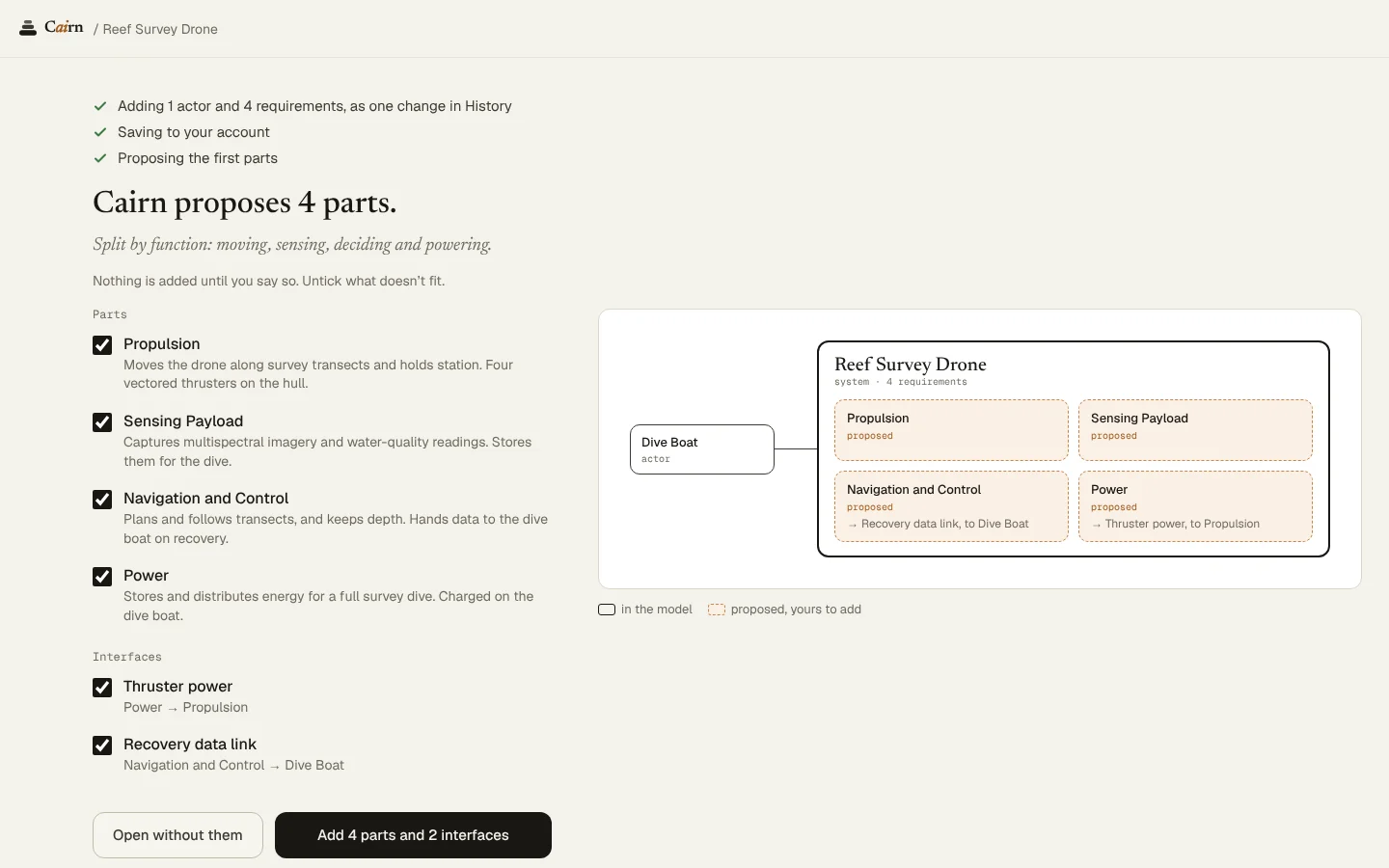
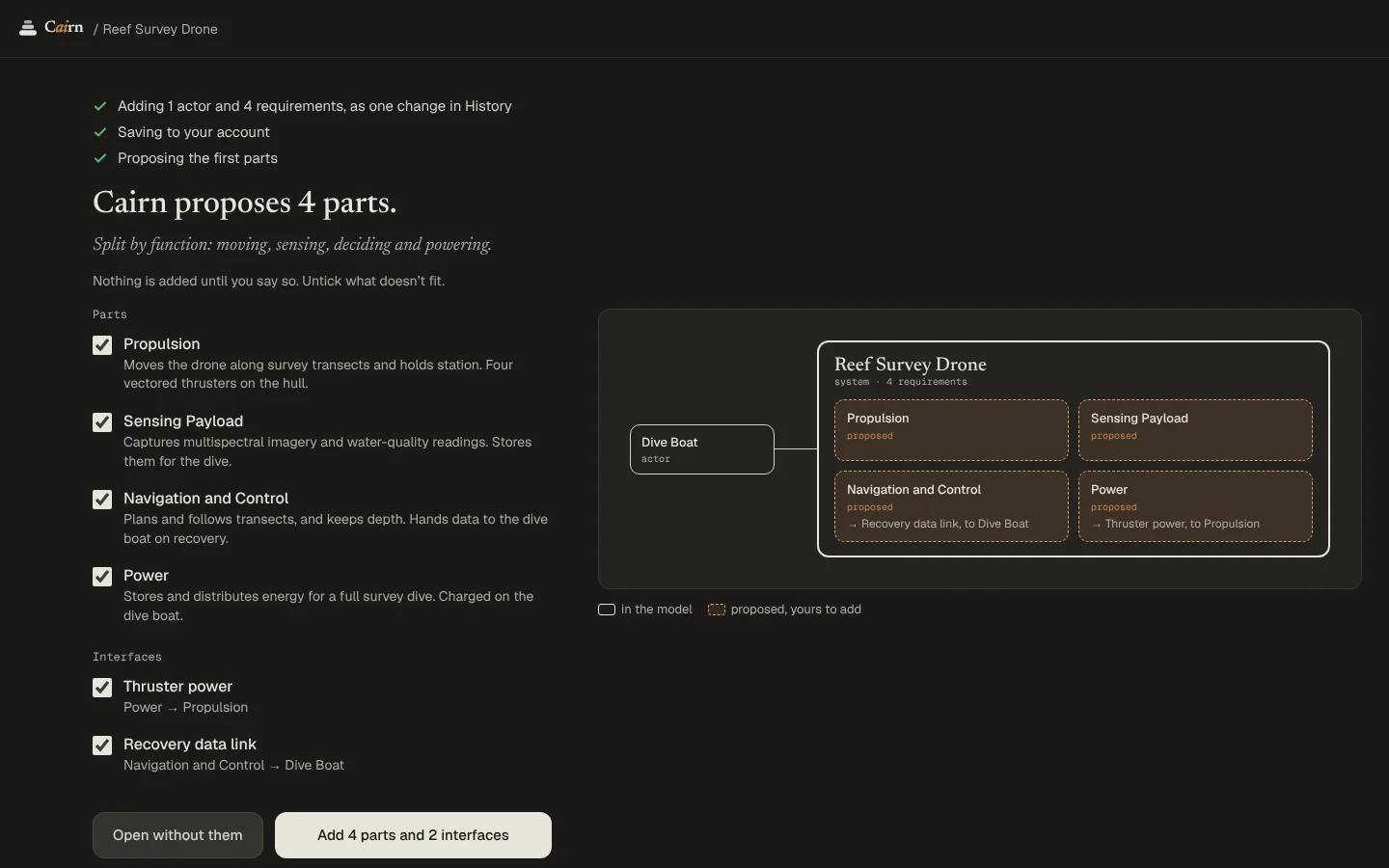
When you build, the actors and requirements you kept go in as one change. Then the Architect proposes the first parts and the interfaces between them.
Tick the parts you want in the interview, or leave the proposal waiting in Change Review. Nothing is applied behind your back.
Where it came from
History keeps an Origin entry for a project started from the interview: your answers, each actor and requirement it settled and what that became, and how the first proposal was settled. Overview shows a From your interview card until you're done with it.
Questions
- Do I need to know systems engineering to use the interview?
- No. The questions are in plain words, and you can answer that you're not sure. Cairn marks what it assumed so you can check it later.
- What happens to the assumptions?
- They stay out of the model unless you keep them. Each is marked Assumed, so you can always tell it from what you said.
- Can I start on my phone?
- Yes. The interview works on a phone and saves as you go. You finish the model on a computer, where the workspace is.
See it on your own system.
Describe what you are building and Cairn interviews you, then builds the first model with you.