Features System decomposition
Decompose a system, one reviewed step at a time
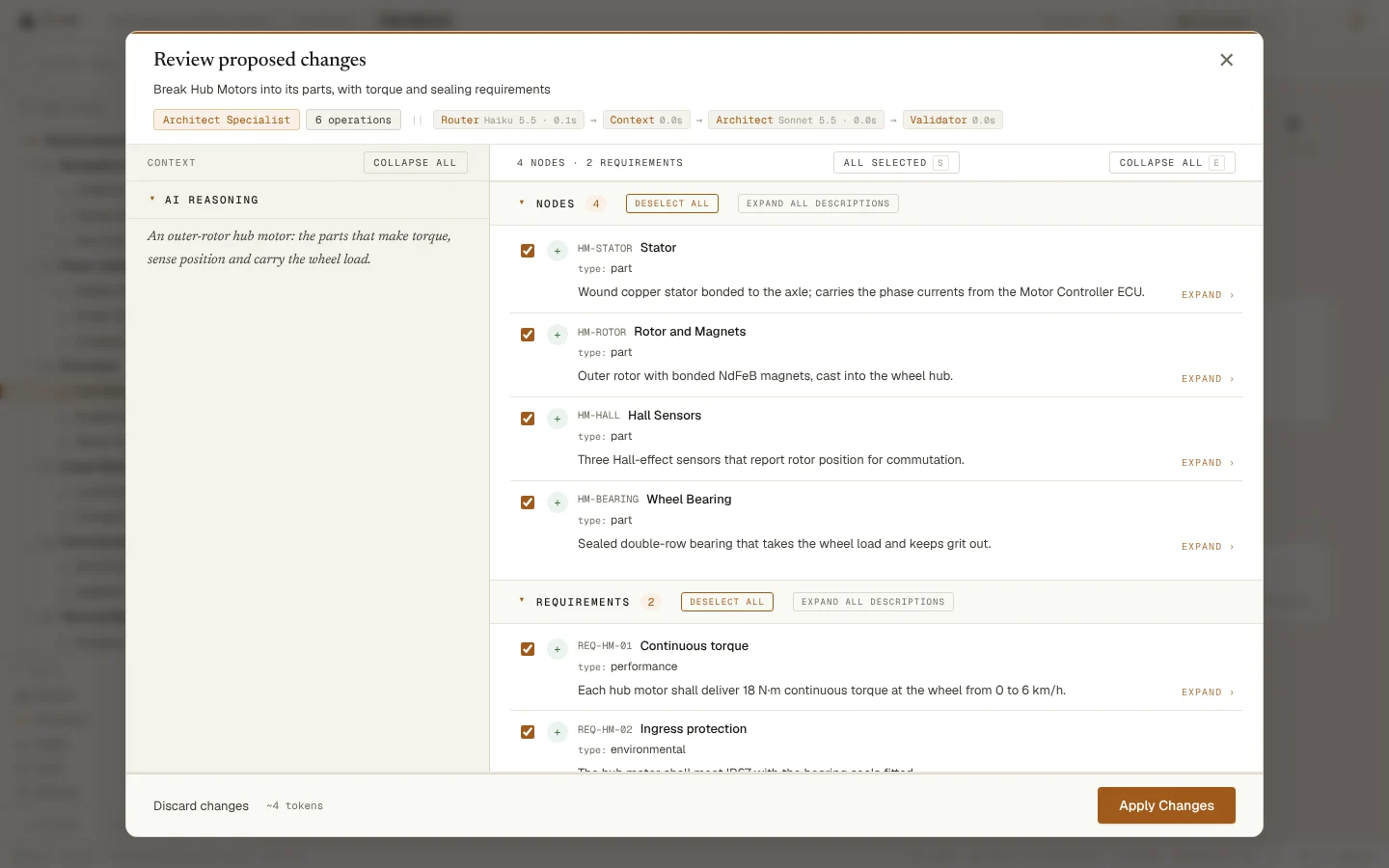
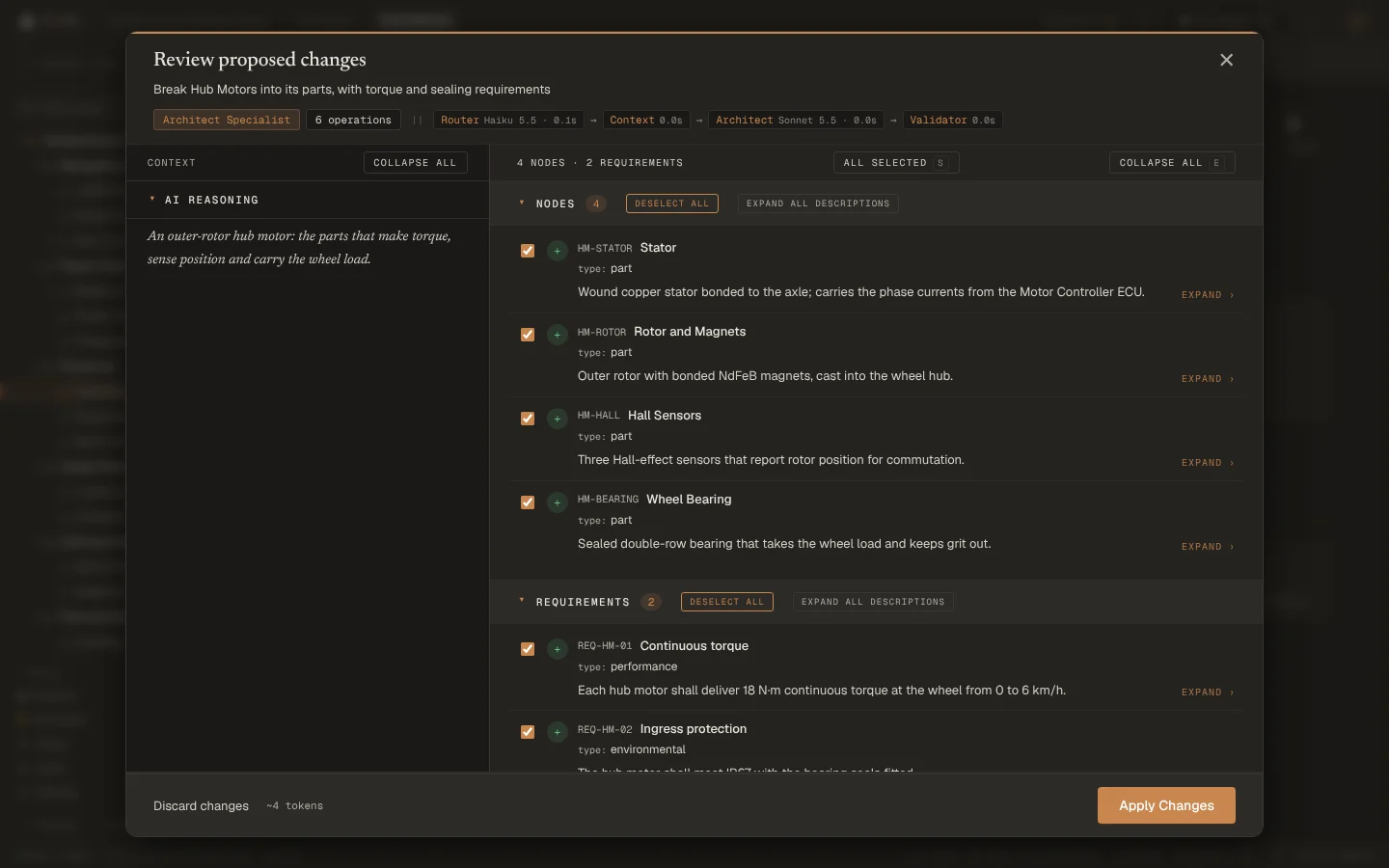
Pick a part of the system and ask Cairn to break it down. The Architect proposes the parts beneath it and the requirements they bring, as a change you review before it joins the model.
A tree, not a transcript
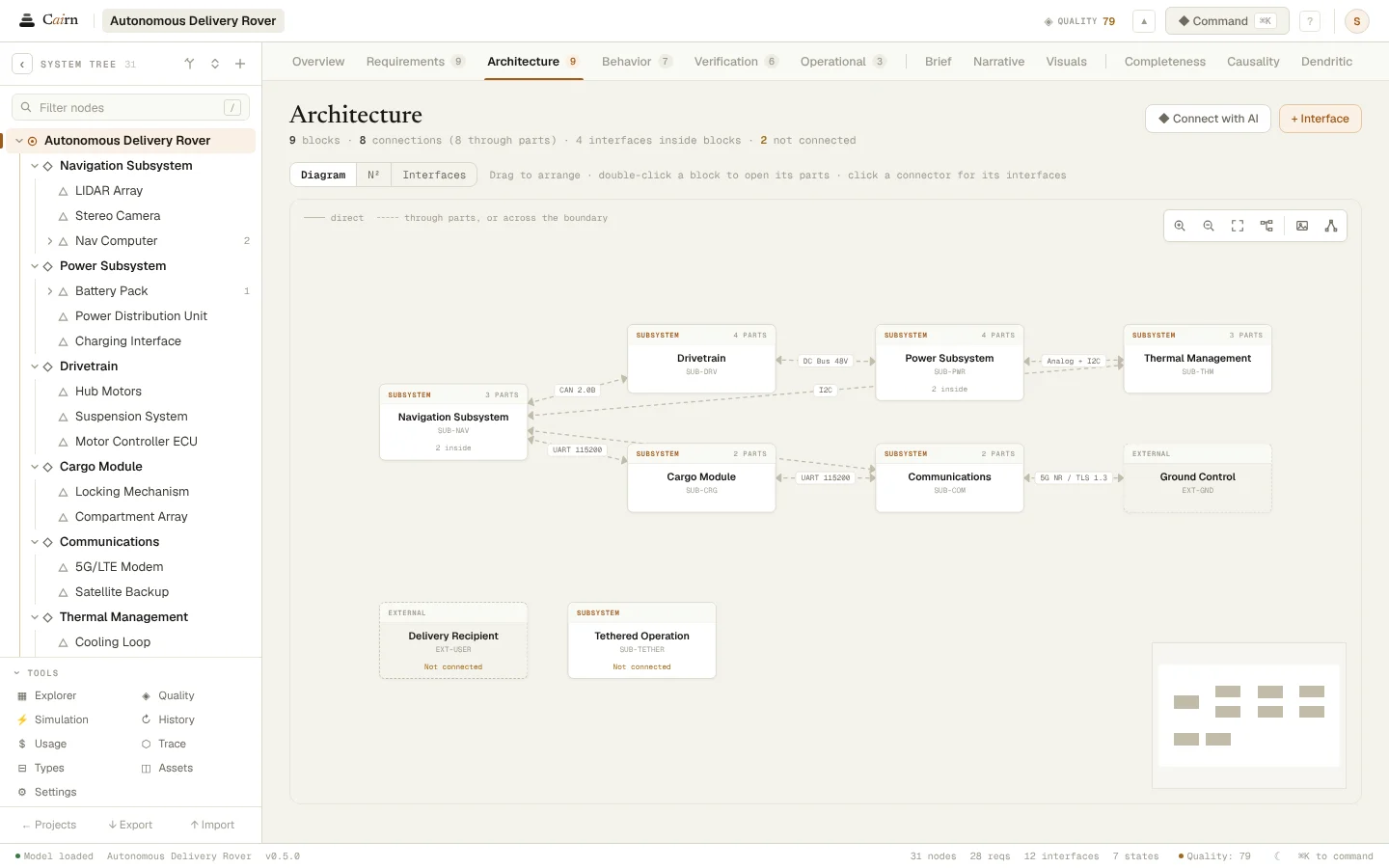
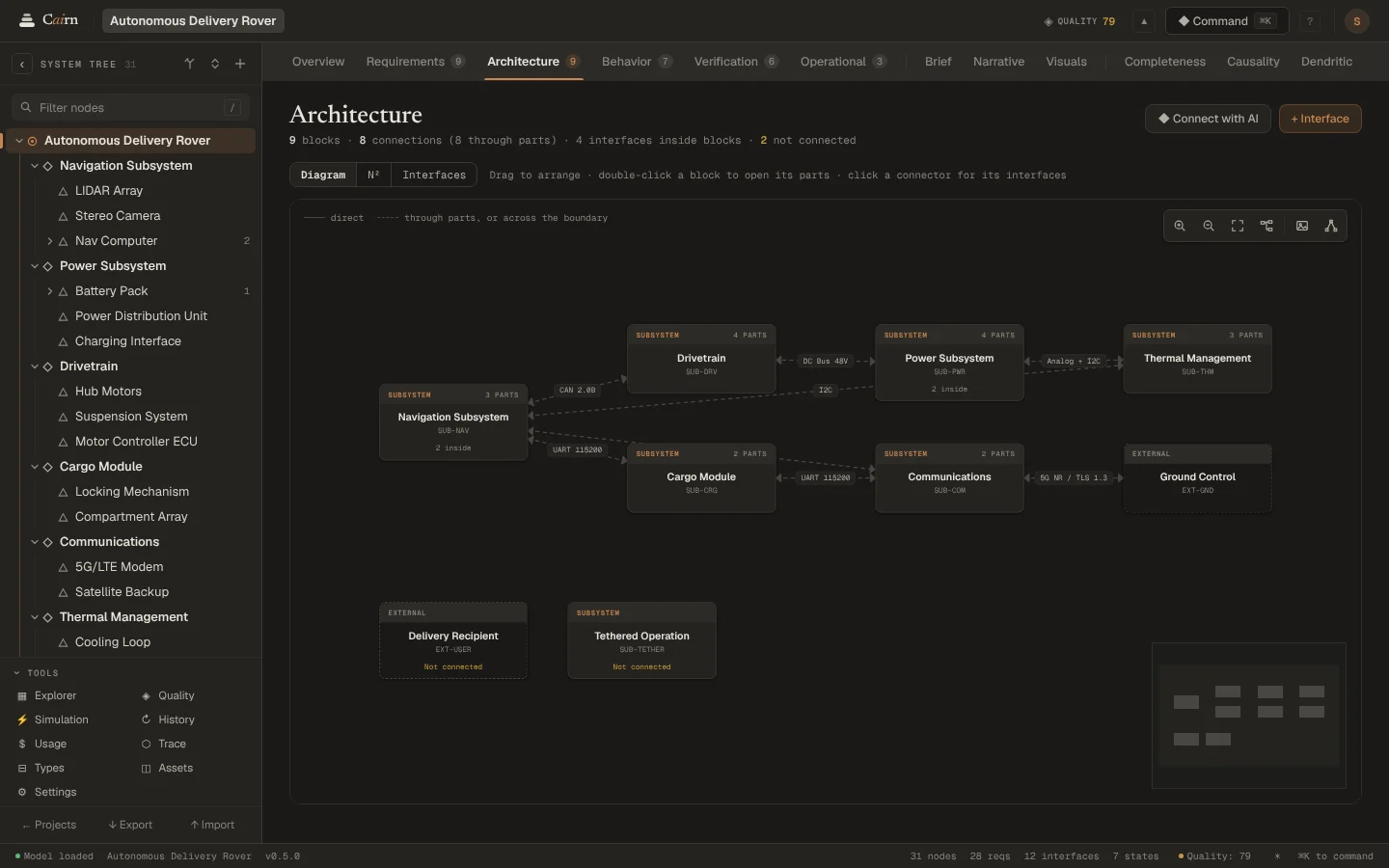
The system tree holds the model from the system down to its parts: subsystems, assemblies, parts, and the external actors around them. Each node carries a description, engineering parameters with units, and everything attached to it.
The AI proposes; you decide
A request goes to a router, which picks the specialist for the job: the Architect for structure. Its proposal is checked before you see it: ids, references, required fields and the shape of the tree.
In Change Review you see each part it would add and why. Untick what doesn't fit and apply the rest as one change.
By hand, too
Add, rename, move and delete nodes in the tree, by keyboard or by dragging. Hand edits are changes like any other, so History keeps them and undo works the same way.
Decisions stay with the design
When a part was chosen over an alternative, the Dendritic lens keeps the alternative, why it lost and the principle that decided it, next to the part that won.
Questions
- Does the AI change my model directly?
- No. Every AI proposal is a ChangeSet that opens in Change Review. Nothing changes until you apply it, and any change can be undone from History.
- How deep can a decomposition go?
- As deep as the system needs. Ask about any node in the tree, and the proposal is written for that node, with what is above, beside and beneath it in view.
See it on your own system.
Describe what you are building and Cairn interviews you, then builds the first model with you.