Features Design decisions
The decisions behind a design
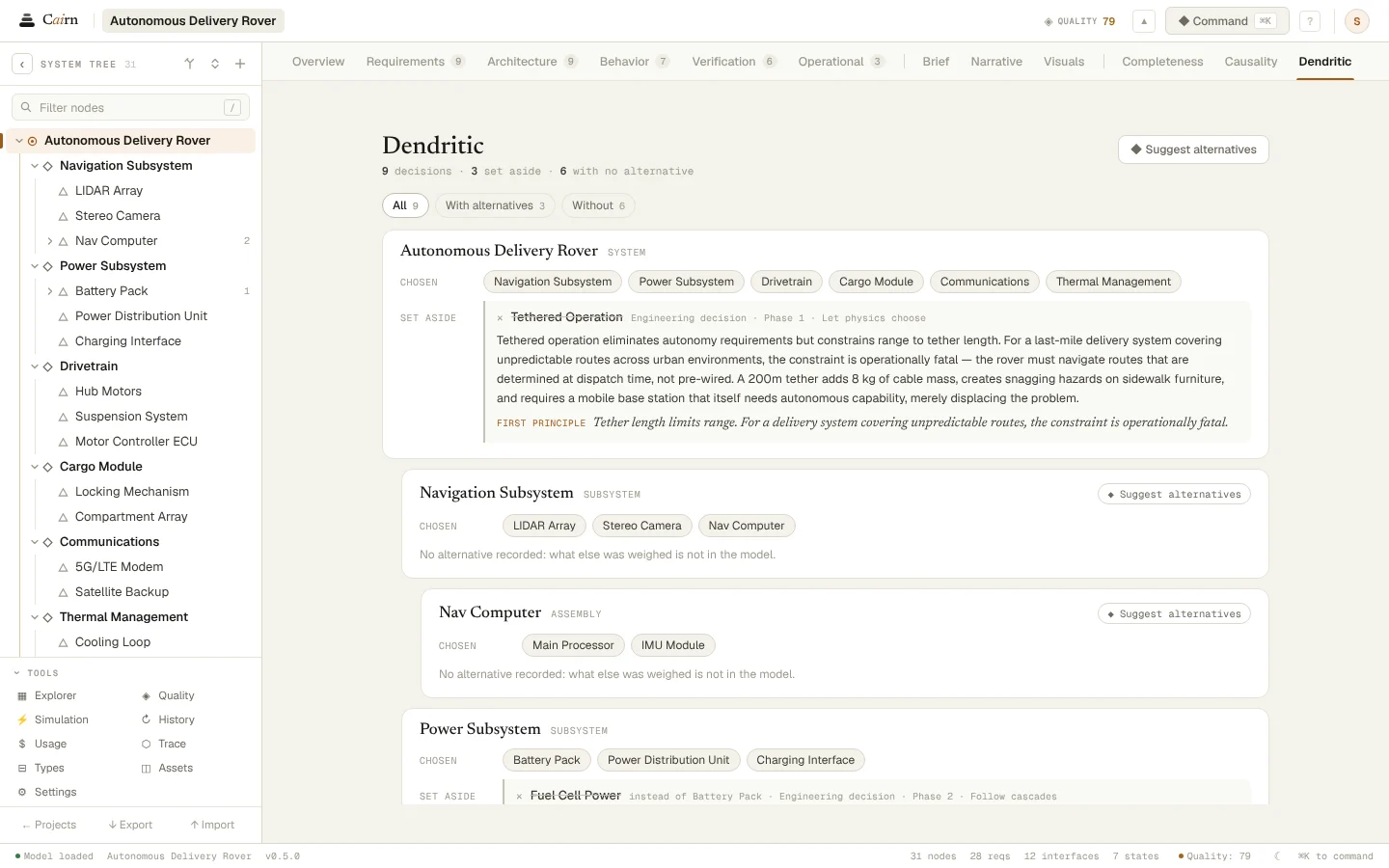
Every part of a system is a choice, and most of the reasoning lives in the options that lost. The Dendritic lens keeps them: what was chosen, the alternatives set aside, why each lost and the principle that decided it, and what is still open.
Chosen, set aside, still open
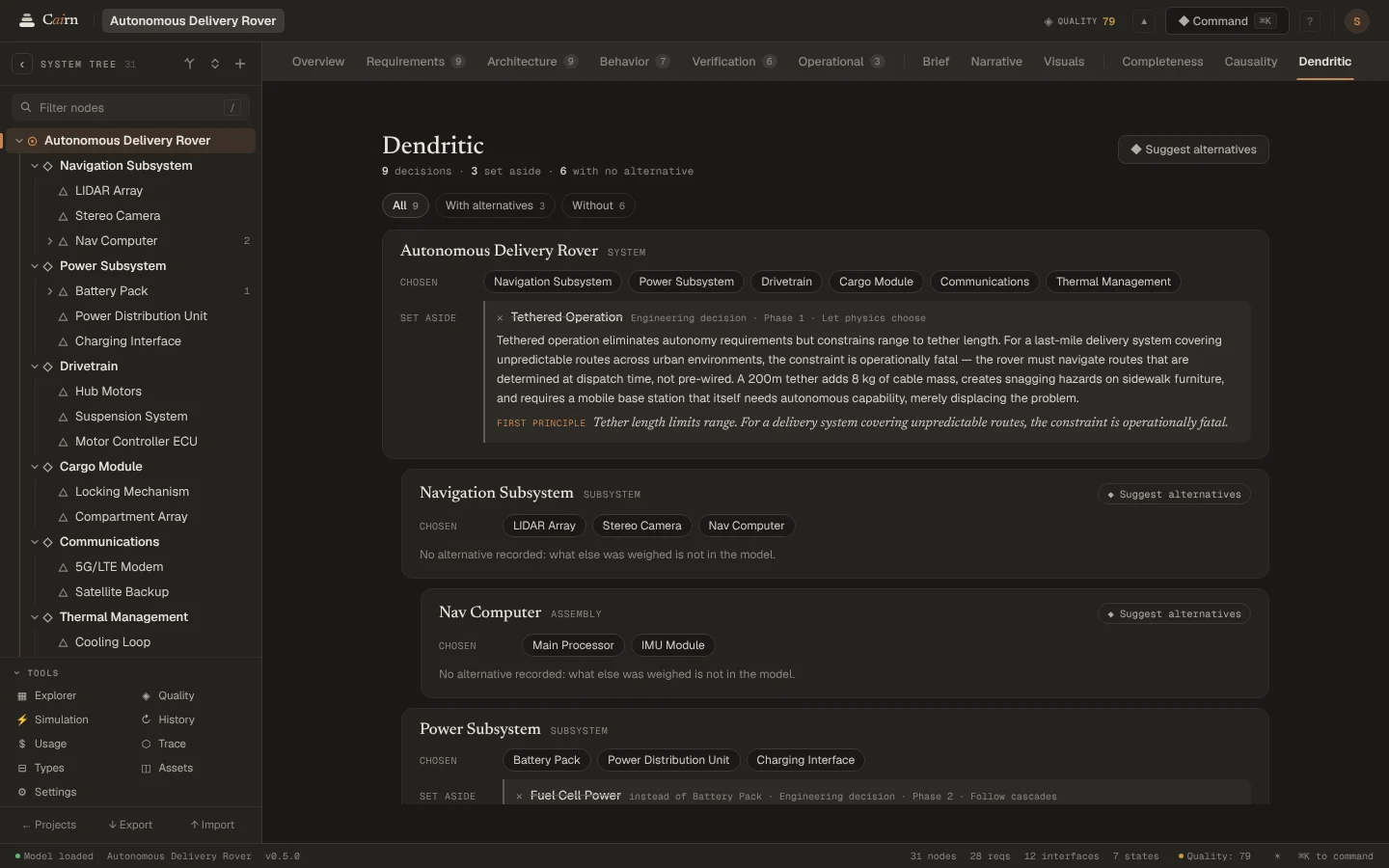
For each node with parts, the parts it has are what was chosen. Beside them sit the alternatives that were weighed and set aside, each with what it was weighed against, why it lost, its first principle, the kind of decision and its phase, and the options still open.
The lens says which decisions record no alternative, rather than inventing one.
Physics first
A dendritic decomposition is made in order. Establish the physics nothing can change. Let physics choose what it forces. Follow the cascades those choices set off. Size the envelope. Then fill it with what fits inside.
Each decision records which of those five phases, numbered 0 to 4, it belongs to, so you can see whether a choice was forced or made.
A worked example: the rover
The rover template keeps three dead branches. Tracked drive was weighed against the hub motors and lost: on pavement, tracks add mass and noise to solve a traction problem the rover doesn't have. Its first principle: ground pressure is mass over contact area.
A fuel cell was weighed against the battery pack and lost once the hydrogen storage and the plant around the cell were counted. Tethered operation lost because a tether limits range, and delivery routes are set at dispatch.
Maturity that rolls up
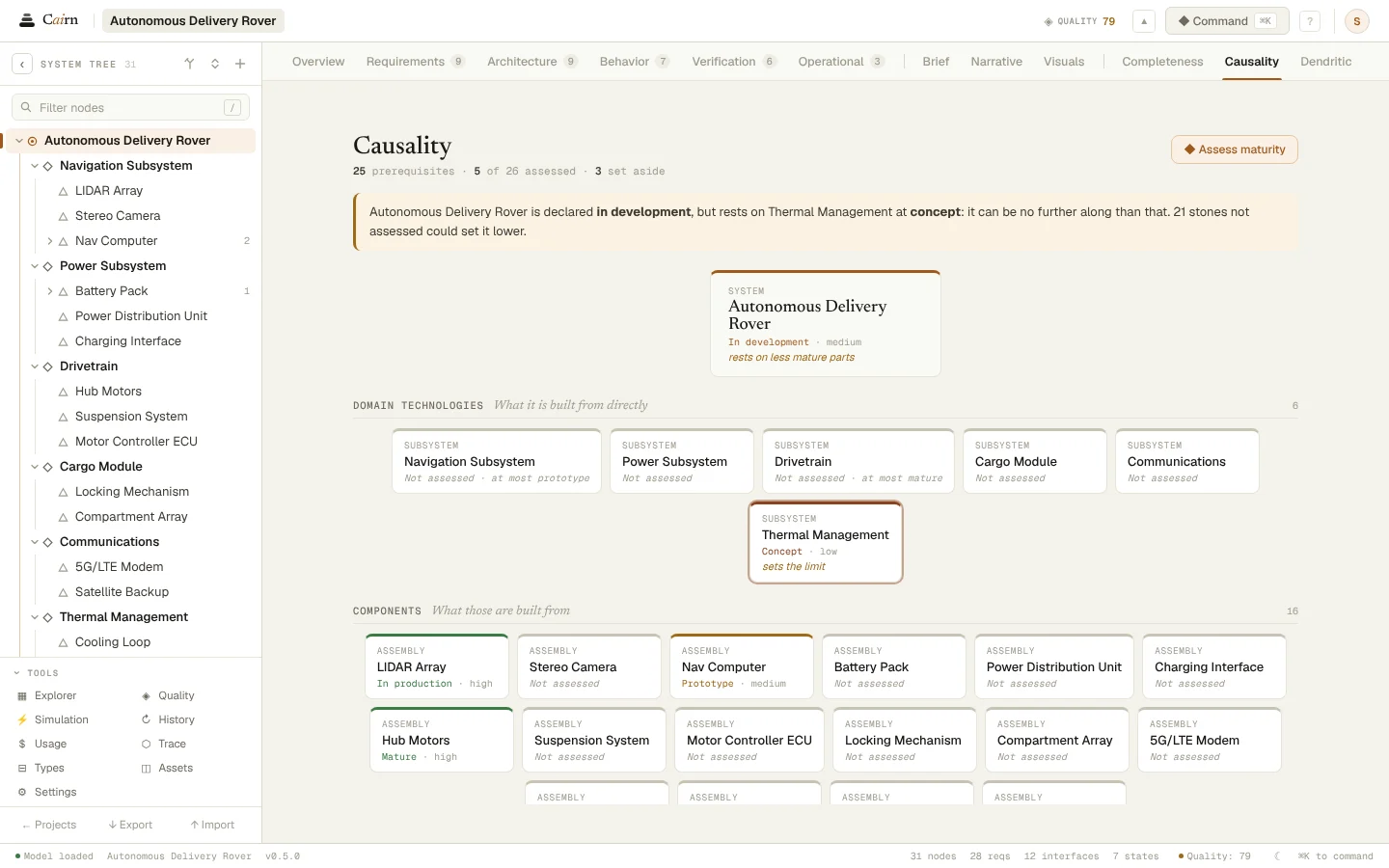
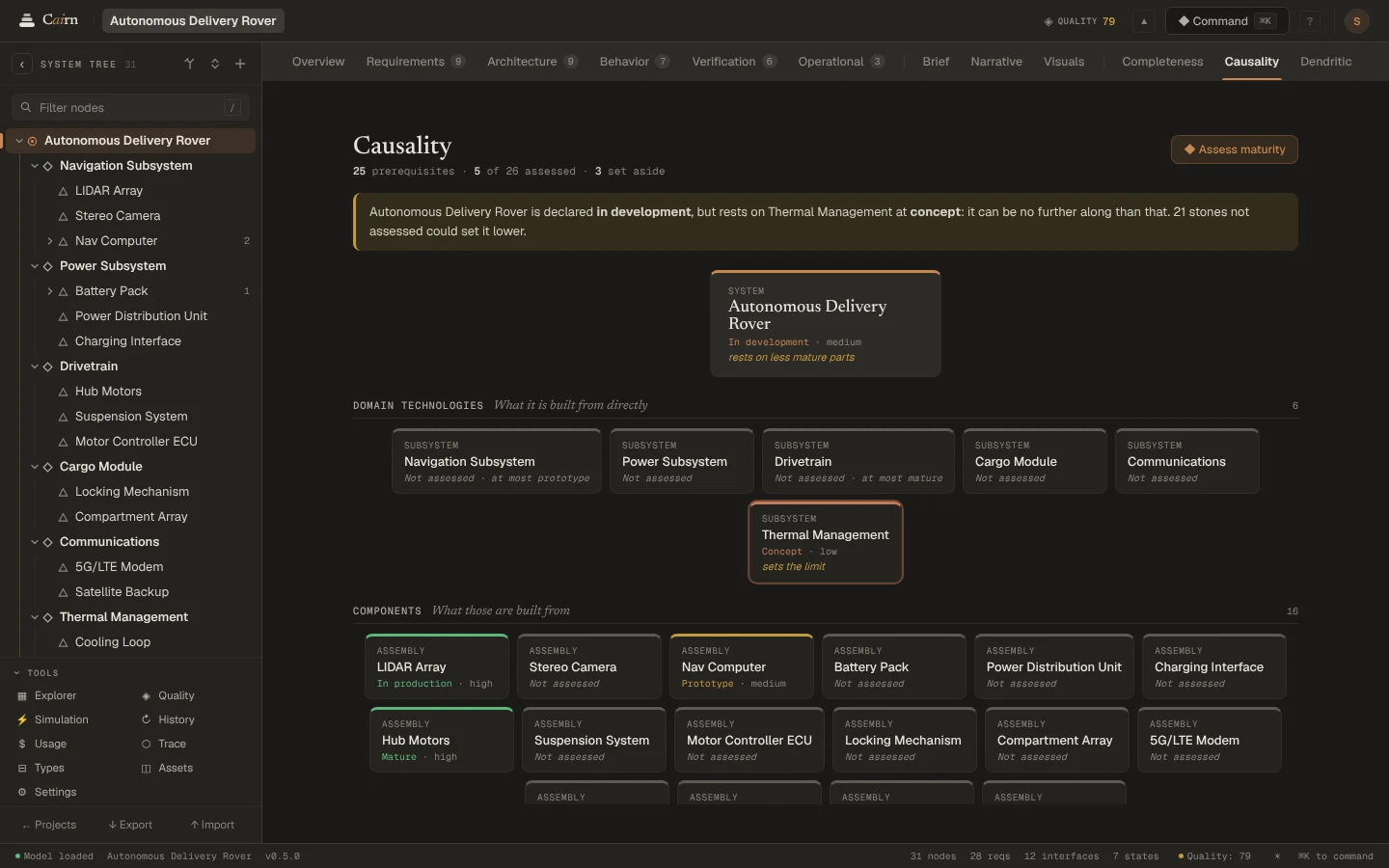
The Causality lens sets each part on Harney's Pyramid of Causality, with a maturity stage. The system can be no further along than the least mature part it rests on, and the lens names that limit and what sets it.
By hand, or proposed
Record an alternative and its reasoning in the inspector, or ask AI to suggest alternatives for a node, through Change Review. An AI maturity assessment never overwrites a stage a person set.
Questions
- Why keep the alternatives that lost?
- Because the reasons outlive the decision. When a requirement changes, the reason an option lost may no longer hold, and the record shows which decisions to revisit.
- How is this different from a trade study?
- A trade study weighs options against criteria to choose one. Cairn keeps the outcome next to the design: what was chosen, what was set aside and why, for every node with parts.
See it on your own system.
Describe what you are building and Cairn interviews you, then builds the first model with you.